
Translation in english available at the bottom
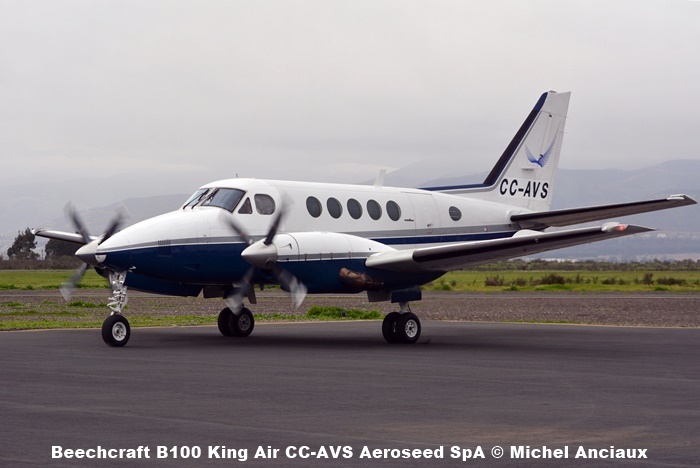
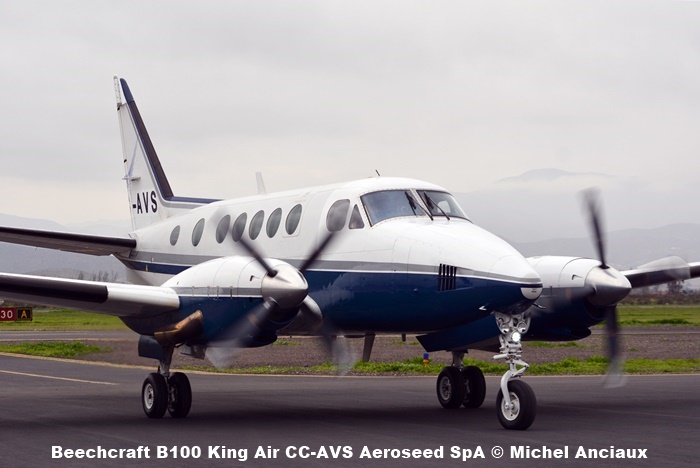
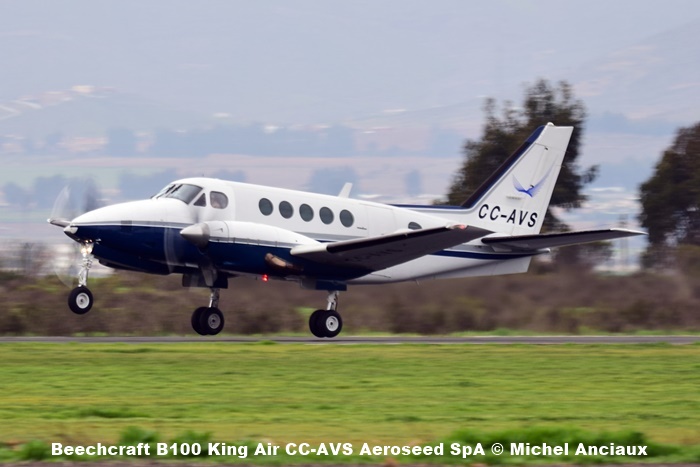
El pasado lunes 29 de julio, aterrizo en el aeropuerto de la Serena – la Florida el Beechcraft B100 King Air con matrícula CC-AVS de Aeroseed SpA.
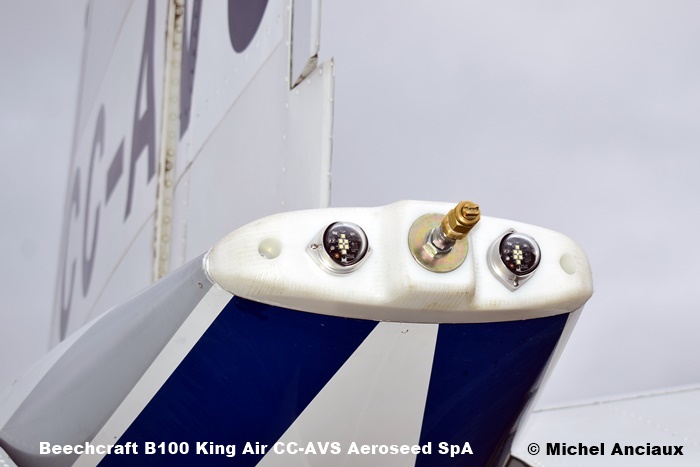
Si a primera vista no se diferencia de ningún otro Beech B100, una revisión más detallada nos muestra una conversión en la cola del avion que nos indica bien la función que desarrollará el avion.
Se trata de un aspersor que permite arrojar a la atmosfera una solución de acetona mezclado con yoduro de plata, permitiendo la formation de gota de agua, lo que aumentaría las probabilidades de lluvia.

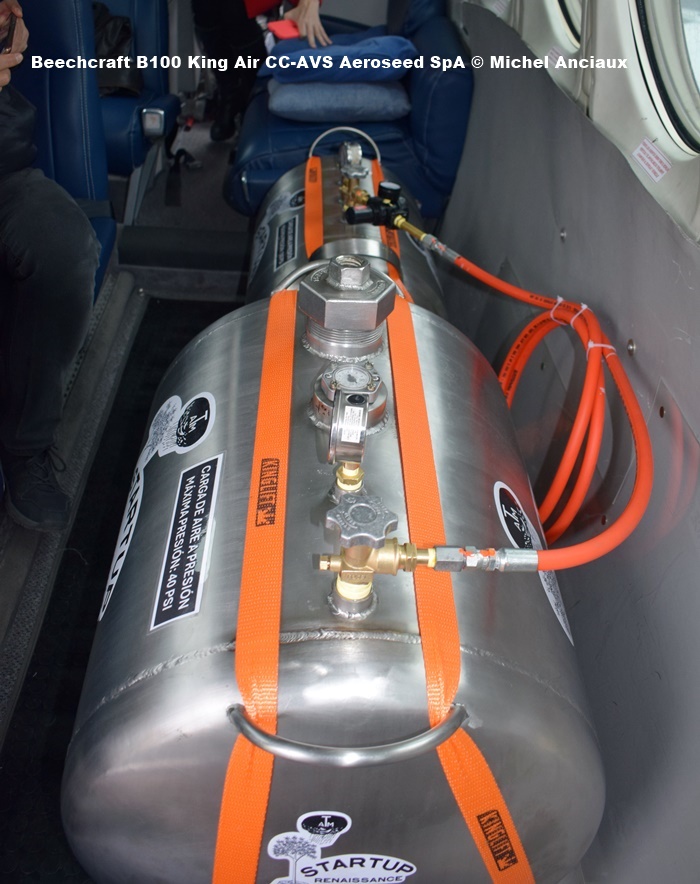
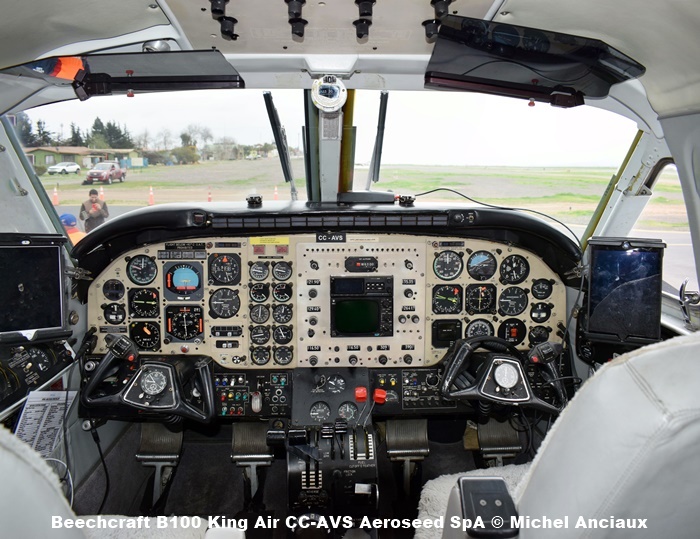
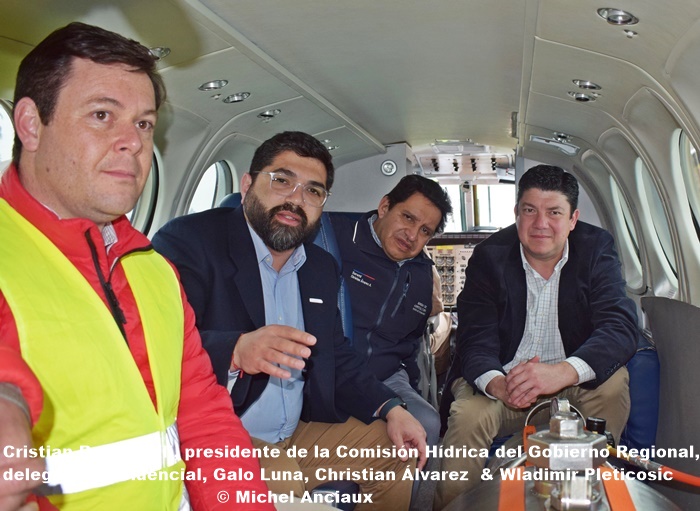
Una visita a la cabina nos permitió constatar también la instalación de dos estanques, uno para almacenar la solución y el segundo con aire comprimido para expulsar el producto en las corrientes ascendentes de las nubes estimuladas siendo de preferencias del tipo cumulonimbus o estratocumulus.

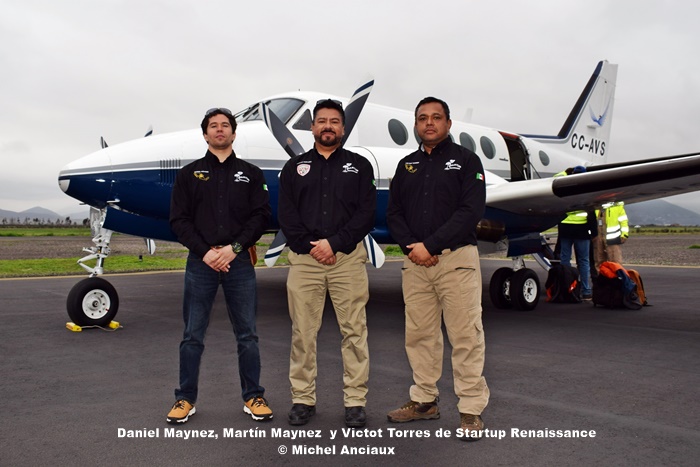

El proyecto es parte de un plan piloto iniciado por la Junta de Vigilancia del Río Elqui en conjunto con la Corporación para el Desarrollo y la Integración Paso Agua Negra (CORPAN), utilizando los servicios de la empresa mexicana Startup Renaissance.
La idea siendó la estimulación de lluvias con el fin de compensar las escaseces de precipitaciones en la región de Coquimbo. Es solo de comprobar la situación en Puclaro y La Laguna, que cuentan con solo 10% de sus capacidades, significando bajas posibilidades de riego para la agricultura local.
Alex Cortes, el gerente de la Junta de Vigilancia del Río Elqui, informo que el avion viene equipado para este tipo de operación en el cual se utilizará una dosis de yoduro de plata. Permitirá reducir la sequía que afecta los embalses, igual si hubo un poco de lluvia.

En cuanto al tema ambiental, los estudios no han demostrados evidencias de posibles efectos perjudicial debido a la poca cantidad de producto utilizado.
En base a estudios realizados en operaciones previas, si se indica un aumento de 10% en las precipitaciones usando modos tradicionales, el método que se utilizará aquí podría demonstrar un aumente de hasta el 23%.
la Junta de Vigilancia del Río Elqui informo que la zona de operación estará concentrada entre el embalse Puclaro y la cordillera.
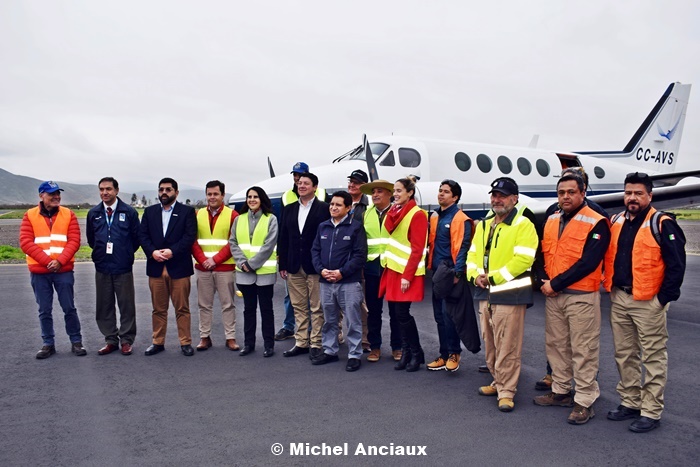
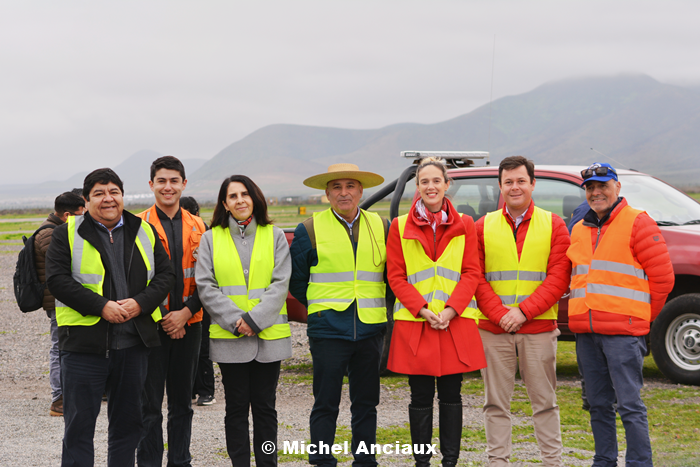
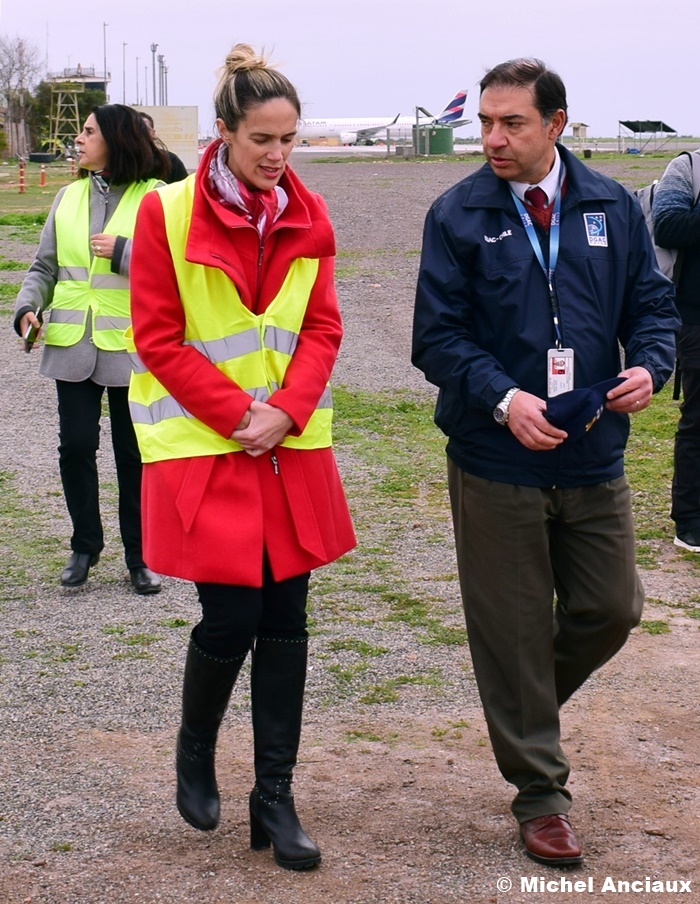
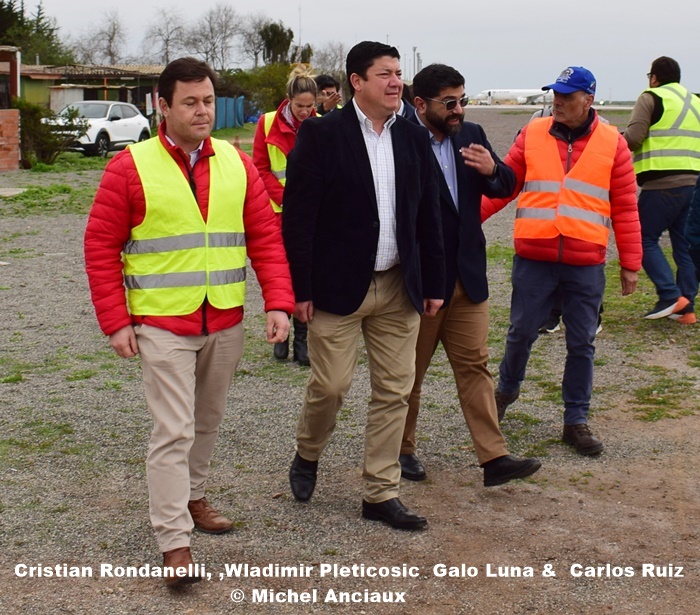
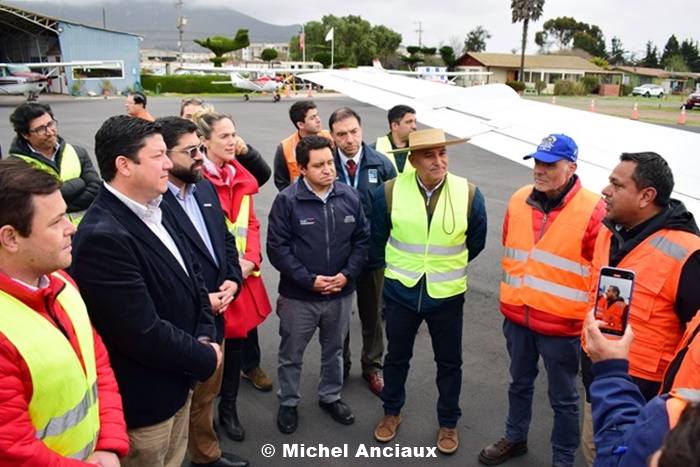
El martes 30 se realizó una presentación a la prensa, en la cual se contó con la participación de autoridades regionales, representantes del aeropuerto de la Serena y socios del Club Aéreo de la Serena.
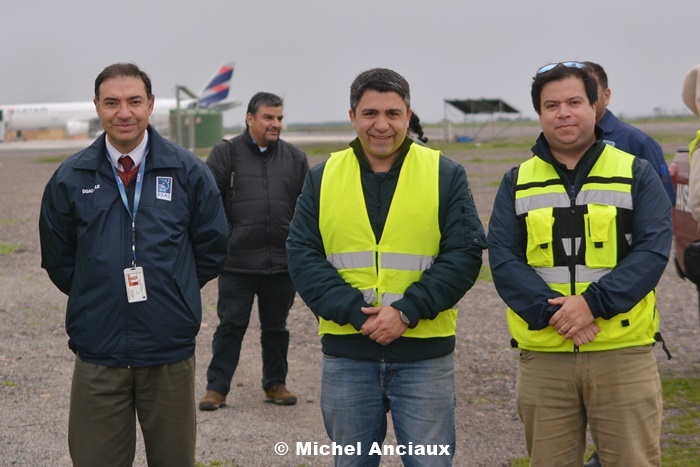
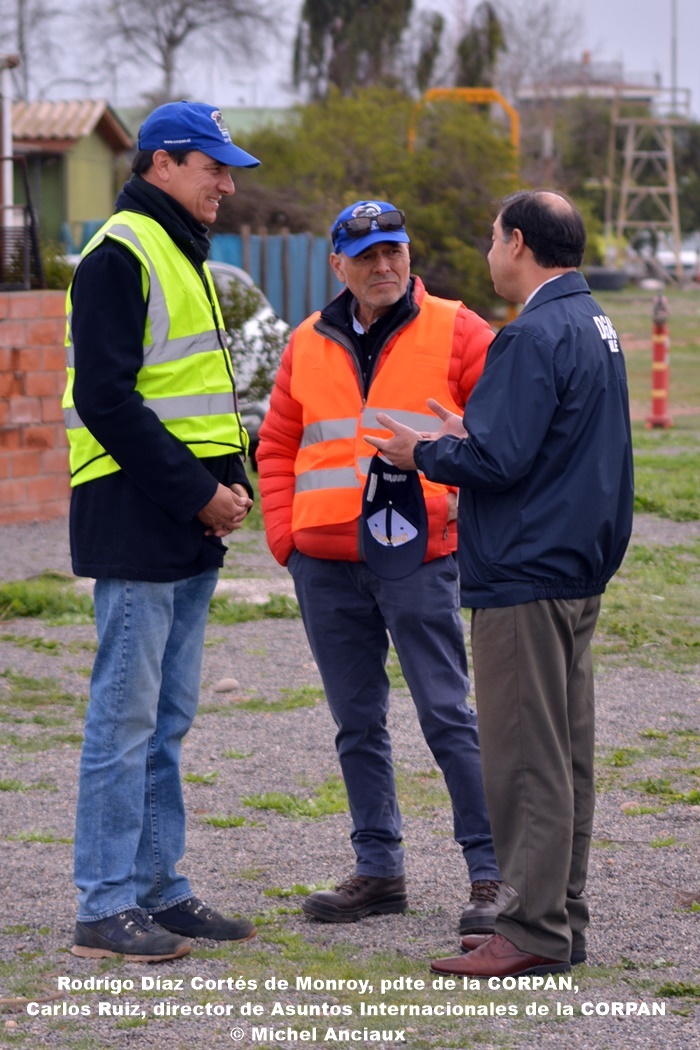
El señor Carlos Ruiz, director de Asuntos Internacionales de la CORPAN declaró en la conferencia de prensa que el avion utiliza un método diferente de las que se utilizaba en los proyectos previos donde se practicaba con combustión a través de bengalas y quemadores.

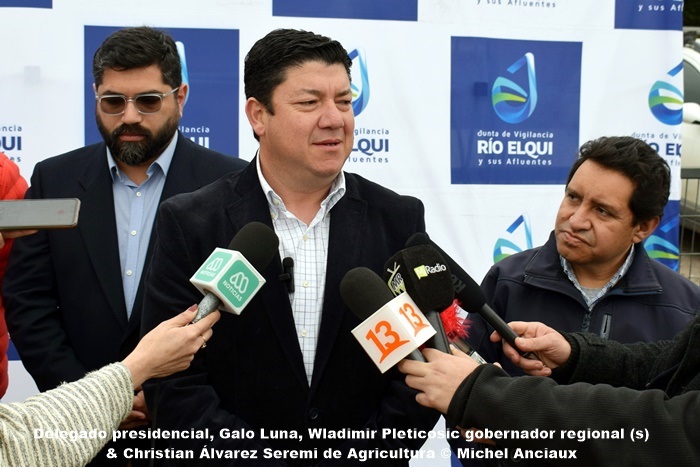
El delegado presidencial, Galo Luna señalo el compromiso que se estableció para facilitar los trámites y compromisos para concretar el proyecto destacando además el aporte de entidades privadas.

el gobernador regional (s), Wladimir Pleticosic, agregó que se espera los resultados de esta operación y de declarar que «Los recursos que son de todos los chilenos y los habitantes de la región tenemos que saber utilizarlos y tener los argumentos necesarios para poder invertir. Con esta acción vamos a poder entender que efectivamente es posible, que las condiciones climáticas nos dan la posibilidad de hacer este ejercicio. Esperamos tener buenos resultados y todas las acciones que estén a nuestro alcance las estamos poniendo a prueba en la región. Si esto funciona, nos comprometemos desde el gobierno regional, en conjunto con el CORE, a la posibilidad de invertir no solo en Elqui, sino también en Limarí y Choapa, para llenar nuestros embalses»

El Beech King Air extenderá sus operaciones en la zona por un periodo de 2 meses. Y si los resultados son satisfactorios, es de esperar que el Estado respalda este proyecto.



Michel Anciaux
Fuentes de informaciones
https://startuprenaissance.com/
https://www.diarioeldia.cl/noticias/2024/07/26/121783-instalan-equipamiento-especial-en-avion-que-llevara-a-cabo-bombardeo-de-nubes-en-la-region
https://www.diarioeldia.cl/noticias/2024/07/31/121855-aprovechando-el-sistema-frontal-este-viernes-se-realizara-el-primer-vuelo-para-estimular-nubes-en-la-zona
https://www.diarioeldia.cl/noticias/2024/07/22/121691-los-detalles-del-modelo-avion-para-bombardear-las-nubes-llega-esta-semana-a-la-region
https://www.miradiols.cl/2024/07/30/bombardeo-de-nubes-comienza-este-viernes-y-ya-definieron-areas-de-trabajo/
https://laserenaonline.cl/2024/04/11/bombardeo-de-nubes-solucion-efectiva-a-la-sequia/
https://www.meganoticias.cl/nacional/454412-bombardeo-de-nubes-cuando-sera-en-que-zonas-se-hara-pdp-31-07-2024.html
https://www.meganoticias.cl/nacional/454180-bombardeo-de-nubes-que-es-como-funciona-avion-startup-renaissance-coquimbo-pdp-29-07-2024.html
Operations with the aircraft in charge of the rain stimulation project in the Coquimbo region.
Last Monday, July 29, the Beechcraft B100 King Air with registration CC-AVS of Aeroseed SpA landed at the airport in La Serena – Florida.
If at first glance it does not differ from any other Beech B100, a more detailed examination shows us a conversion in the tail of the aircraft that clearly indicates the function that the aircraft will perform.
This is a sprinkler that allows a solution of acetone mixed with silver iodide to be thrown into the atmosphere, allowing the formation of water droplets, which would increase the probability of rain.
A visit to the cabin also allowed us to see the installation of two tanks, one to store the solution and the second with compressed air to expel the product in the ascending currents of the stimulated clouds, preferably of the cumulonimbus or stratocumulus type.
A visit to the cabin also gives us the possibility to verify the installation of two tanks, one to store the solution and the second with compressed air to expel the product in the ascending currents of the stimulated clouds, preferably of the cumulonimbus or stratocumulus type.
The project is part of a pilot plan initiated by the Elqui River Surveillance Board in conjunction with the Corporation for the Development and Integration of Paso Agua Negra (CORPAN), using the services of the Mexican company Startup Renaissance.
The idea is to stimulate rainfall in order to compensate for the lack of precipitation in the Coquimbo region. It is just to check the situation in Puclaro and La Laguna, which have only 10% of their capacity, meaning low irrigation possibilities for local agriculture.
Alex Cortes, the manager of the Elqui River Surveillance Board, reported that the plane is equipped for this type of operation in which a dose of silver iodide will be used. It will allow to reduce the drought that affects the reservoirs even if there was a little rainfall.
Regarding the environmental issue, studies have not shown evidence of possible harmful effects, due to the small amount of product used.
Based on studies carried out in previous operations, if a 10% increase in rainfall is indicated using traditional methods, the method used here could show an increase of up to 23%.
The Elqui River Surveillance Board reported that the area of operation will be concentrated between the Puclaro reservoir and the mountain range.
On Tuesday, the 30th, a press presentation was held, attended by regional authorities, representatives of the La Serena airport and members of the La Serena Air Club.
Mr. Carlos Ruiz, director of International Affairs of CORPAN, stated at the press conference that the plane uses a different method from those used in previous projects where combustion was practiced through flares and burners.
The presidential delegate, Galo Luna, pointed out the commitment that was established to facilitate the procedures and commitments to carry out the project, also highlighting the contribution of private entities.
The Surrogate regional governor, Wladimir Pleticosic, added that the results of this operation are expected and declared that «The resources that belong to all Chileans and the inhabitants of the region, we have to know how to use them and have the necessary arguments to be able to invest. With this action we will be able to understand that it is indeed possible, that the weather conditions give us the possibility of doing this exercise. We hope to have good results and all the actions that are within our reach are being tested in the region. If this works, we are committed from the regional government, together with the CORE, to the possibility of investing not only in Elqui, but also in Limarí and Choapa, to fill our reservoirs.»
The Beech King Air will extend its operations in the area for a period of 2 months. And if the results are satisfactory, it is to be expected that the State will support this project.
Michel Anciaux
 Aviation Rainbows