
Translation in english at the bottom
Proyectos de aviones VTOL y en uso para investigaciones
En este cuarto capítulo relacionado con mi visita al museo de aeronáutica y espacio Flugwerft Schleissheim en Múnich en 2022.
Abordare el tema de los proyectos alemanes de aviones con capacidades de despegue y aterrizaje vertical, aviones utilizados en investigaciones y programas de desarrollos aeronáuticos
El museo tiene en presentación 3 modelos con características VTOL:
El Dornier VJ 101-X2, el Dornier Do 31 E-3 VTOL y el VFW-Fokker VAK 191B VTOL
Los aviones utilizados en investigaciones y presente en el museo son los siguientes:
el Rockwell-MBB X-31A experimental aircraft 164585, el Leichflugtechnik-Union LFU 205 D-ELFU, el VFW-Fokker VFW-614 D-ADAM y el Dornier Do 128-6 Turbo Skyservant D-IBUF.
Dornier VJ 101-X2 D-9518
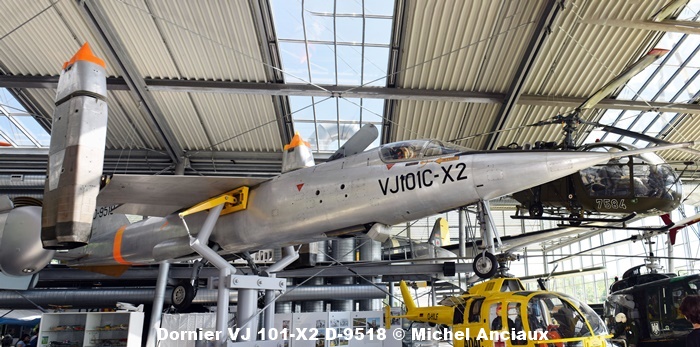
El Dornier VJ 101 fue un proyecto de avión de caza VTOL desarrollado a partir de 1960 culminando con su primer vuelo el 10 de abril de 1963. Las letras V y J siendo las identificaciones de un ‘’Versuchsjäger’’, es decir un caza experimental para el desarrollo de un posible substituto al Lockheed F-104G Starfighter que, en esta época, era el avión de caza estándar de la Luftwaffe.
Dos prototipos fueron construidos pero el proyecto fue cancelado en 1968. Hay que destacar que este diseño fue uno de los primeros aviones de caza VTOL capas de eventuales vuelos a velocidad supersónica de Mach 2.
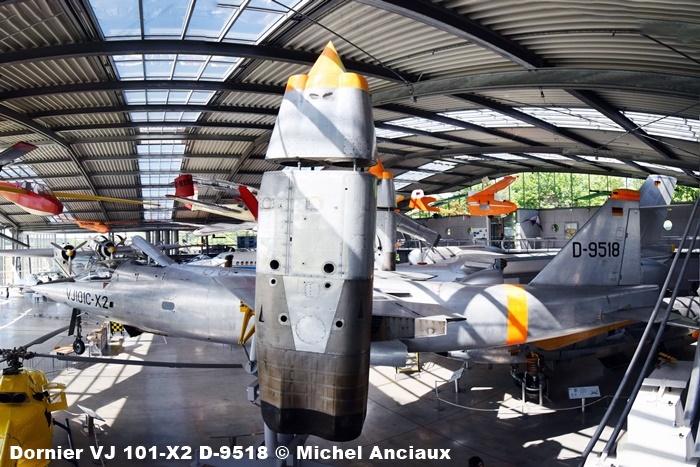
De los 2 prototipos construidos, el D-9517 se perdió en un accidente ocurrido el 14 de septiembre de 1964 mientras realizaba vuelos de prueba. El piloto americano George Bright resultando con heridas luego de eyectarse.
Por su parte, el segundo prototipo con matrícula D-9518 está en presentación estática en el museo de Flugwerft Schleissheim en Múnich y hay que destacar que este mismo fue equipado de un motor con postcombustión.

Características generales
Longitud: 15,7 m
Envergadura: 6,61 m
Peso máximo al despegue: 6.100 kg
Motorización: 6× Turborreactor Rolls-Royce RB145.
Potencia: 12,2 kN o 2.750 lbf de empuje cada uno.
Velocidad máxima: hasta Mach 1,04
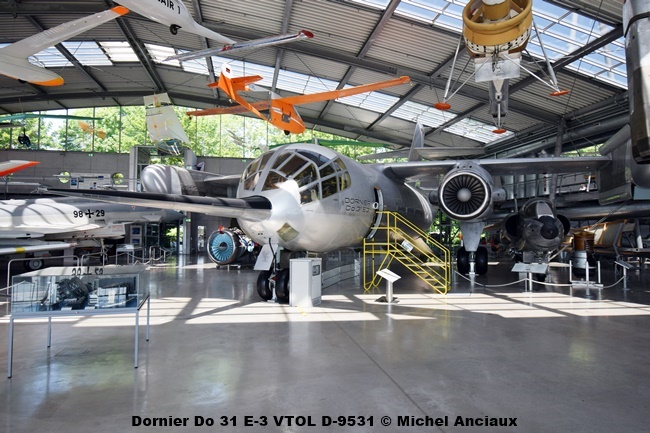
Dornier Do 31 E-3 VTOL D-9531
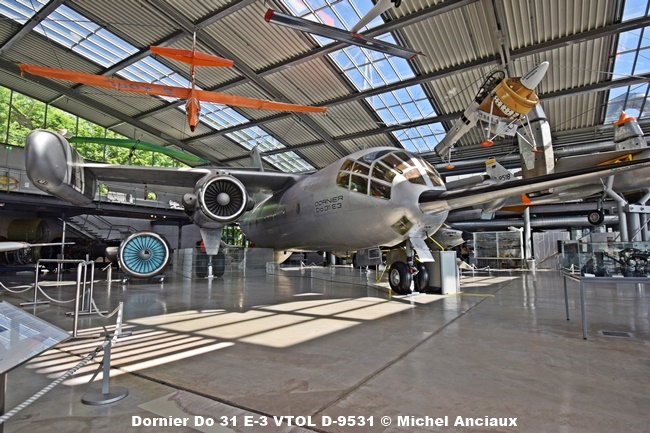
A primera vista, el que se impone por sus dimensiones es este avión de transporte con capacidades VTOL.
Fue diseñado por la Dornier Flugzeugwerke como avión de apoyo táctico en base a la especificaciones BMR-4 de la OTAN.
El concepto se desarrollo a consecuencia de las tenciones con el Bloque del Este y sobre todo las
vulnerabilidades frente a un posible ataque aéreo de las bases aéreas de la Luftwaffe.
En los planes de estudios estaban, entre otras, la necesidad de operar desde las autopistas de Alemania, repitiendo así un concepto utilizado a finales de la segunda guerra mundial.
Si, en estos años, el entonces Luftwaffe operaba con aviones propulsados con motores radiales y los primeros aviones jet Me 262, la situación era bien diferente en 1960.
El peso al despegue y la distancia de recorrido necesaria genero el concepto de aviones con posibilidades de despegues cortos y sobre todo aterrizajes verticales.
A lo largo de su desarrollo, distintos conceptos fueron estudiados para llegar finalmente a los 2 prototipos equipados con 2 góndolas subalares interiores en las cuales estaba un motor turbofán de empuje vectorial Bristol Pegasus BE.53/2 de 68,95 kN (15.500 lbf) con cuatro toberas orientables,
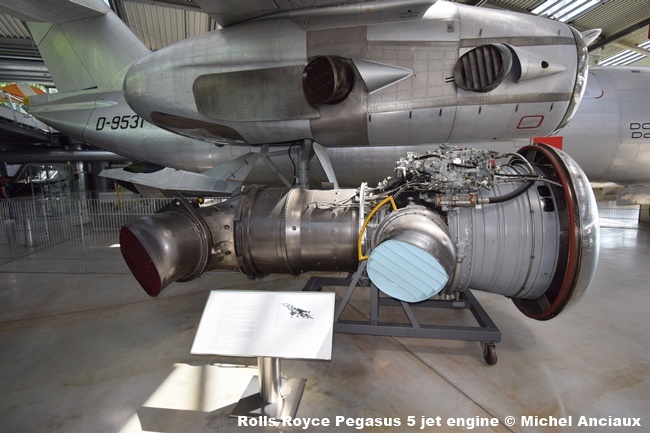
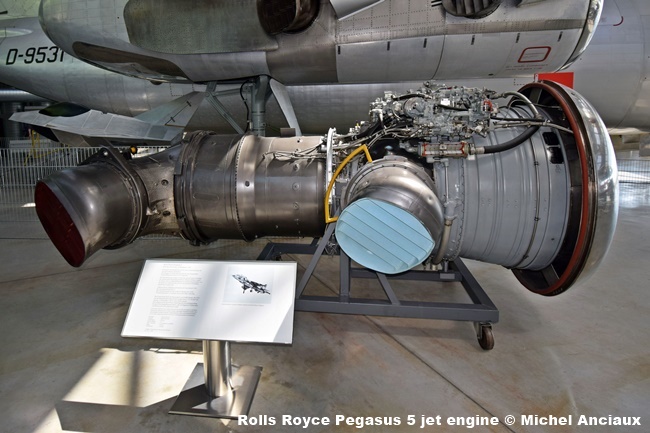
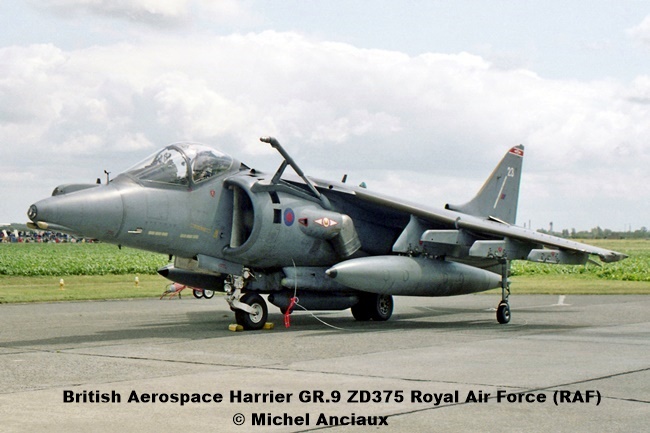
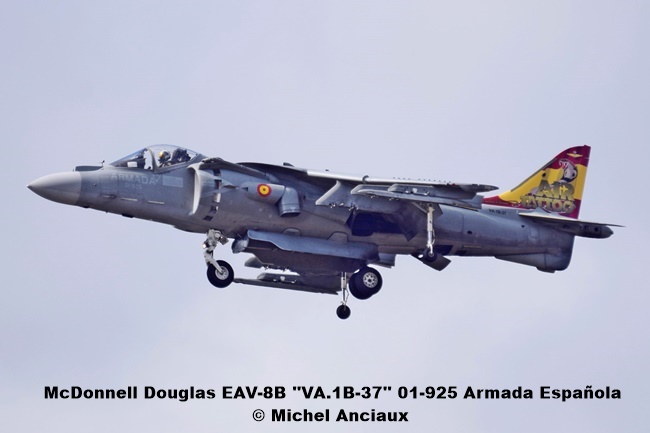
el mismo motor en variantes mejoradas que equipara el British Aerospace Harrier y Sea Harrier así que su versión americana McDonnell Douglas AV-8B Harrier II.
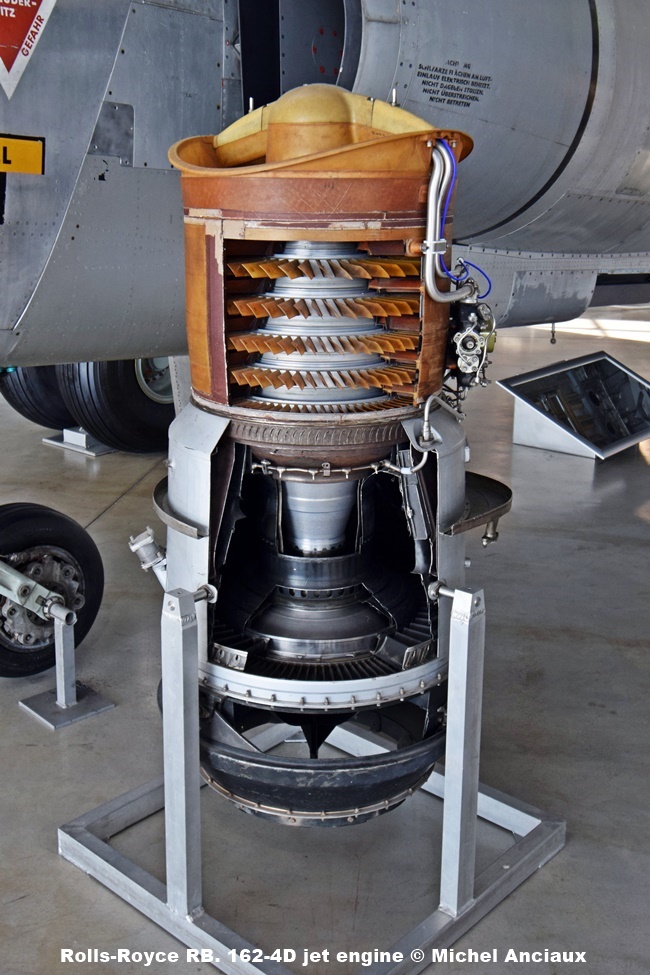
Además, en las puntas de alas están las góndolas con cuatro turborreactores de empuje vertical Rolls-Royce RB162 de 19,57 kN (4.400 lbf), que operan en el despegue y aterrizaje vertical.
El mismo que equipaba el VFW-Fokker VAK 191B VTOL.
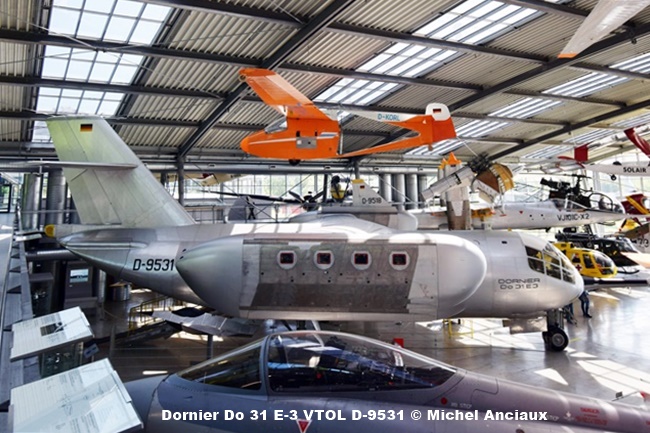
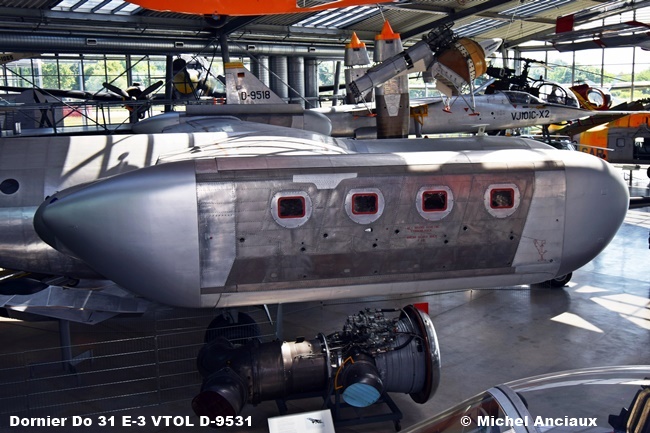
El avión tenía capacidad de carga gracias a una rampa trasera que permitía el transporte de hasta vehículos de 3 toneladas.
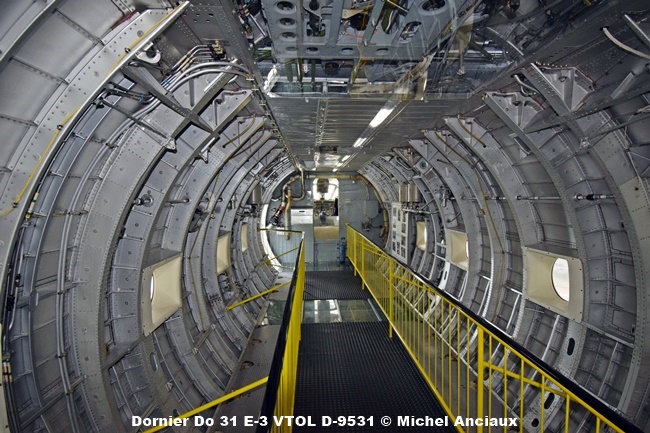
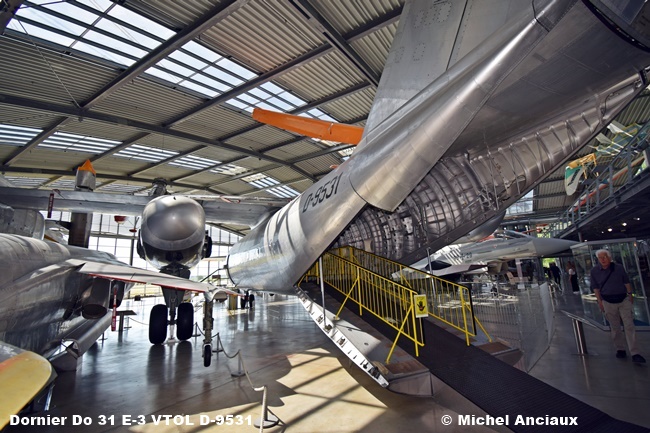
El primer prototipo voló el 10 de febrero de 1967 pero los altos costos de desarrollo y problemas técnico provocaron la cancelación del proyecto en abril de 1970.
2 prototipos y uno para pruebas estáticas fueron construidos.
El D-9530 (E1) está en exposición en el Dornier Museum de Friedrichshafen.
Este fue solo equipado con los motores Pegasus y utilizado en pruebas de vuelo horizontal.
Por su parte el D-9531 (E3) está en el Deutsches Museum de Schleissheim, a poca distancia de Múnich.
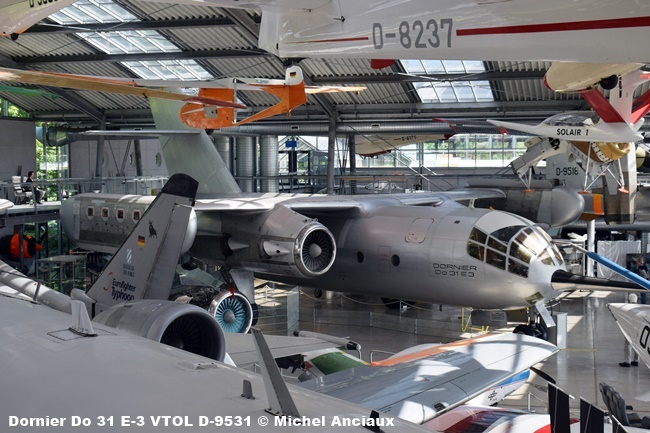
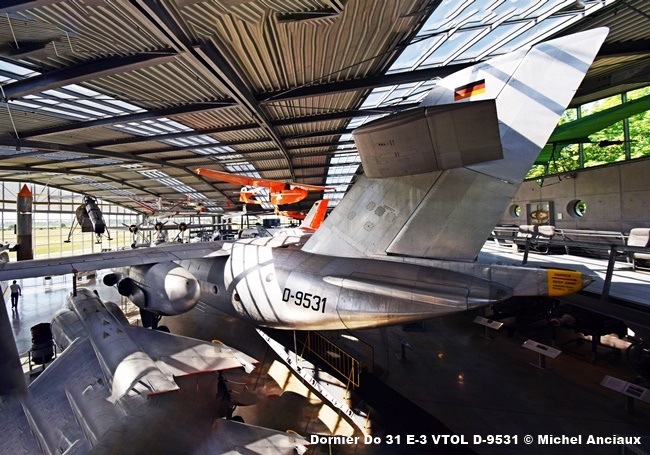
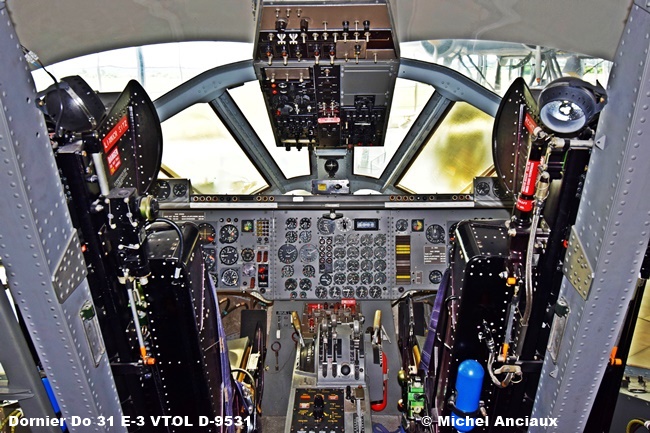
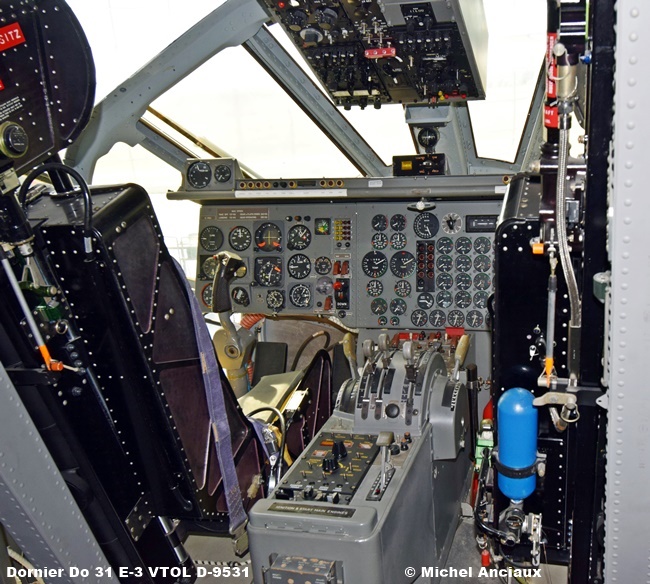
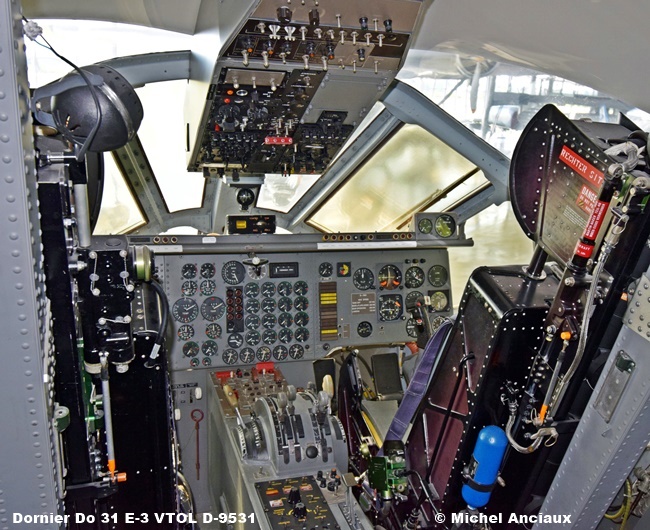
Fue equipado con los motores Pegasus de toberas orientables así que los RB162, para las pruebas de vuelos verticales. Voló por primera vez en julio de 1967, realizando el primer vuelo vertical el 22 de noviembre del mismo año.
A lo contrario de los aviones de caza, el Dornier Do-31 es considerado como el primer y único transporte de reacción de despegue y aterrizaje vertical construido.
Características generales
Longitud: 20,53 m
Envergadura: 18 m
Peso máximo al despegue: 27.422 kg
Peso útil: 3.500 kg
Motorización: 2× Turbofán de empuje vectorial Rolls-Royce Pegasus BE.53/2, 68,95 kN (15.500 lbf) cada uno
8× Turborreactores de empuje vertical Rolls-Royce RB162-4D para elevación, 19,57 kN (4.400 lbf) cada uno.
Capacidad. 2 pilotos y 36 soldados o 24 camillas para heridos
Velocidad máxima:730 km/h
Velocidad de crucero: 650 km/h
Alcance: 1.800 km con carga máxima
Nivel de vuelo: 10.700 m o 35105 ft
VFW-Fokker VAK 191B VTOL D-9563
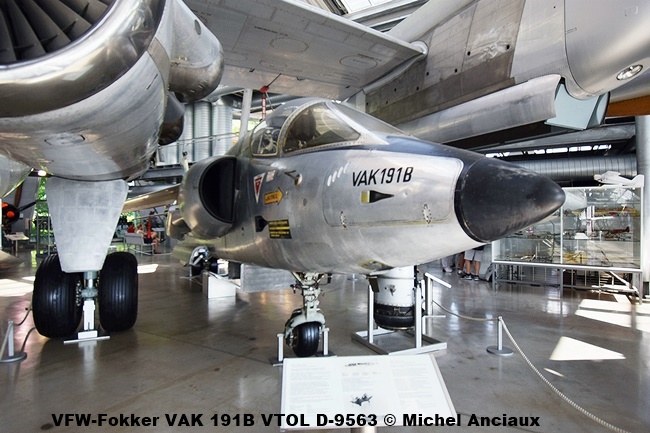
Inicialmente, un proyecto de cazabombardero con capacidad VTOL diseñado y construido por la empresa alemana VFW – Vereinigte Flugtechnische Werke a partir del año 1962 y el objetivo era de sustituir al Fiat G.91, en operación desde septiembre de 1960.
Pero debido a cambios de requisitos formulado por la OTAN, el VAK 191B se convirtió en un banco de prueba y demonstrador de tecnología.
Las letras V, A y K significaban Vertikalstartendes Aufklärungs und Kampfflugzeug, es decir avión de combate y reconocimiento de despegue vertical.
Era propulsado por un Rolls-Royce/MAN Turbo RB.193 generando una potencia de 45,2 kN (10.150 lbf) con empuje vectorial, proporcionando así empuje y sustentación a través de cuatro toberas orientables.
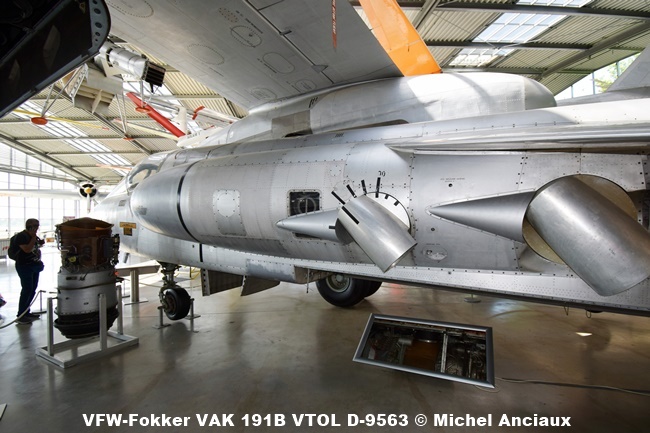
Además, dos turborreactores Rolls-Royce RB162-81 F 08 de 26,5 kN (5.587 lbf) proporcionaban el empuje vertical.
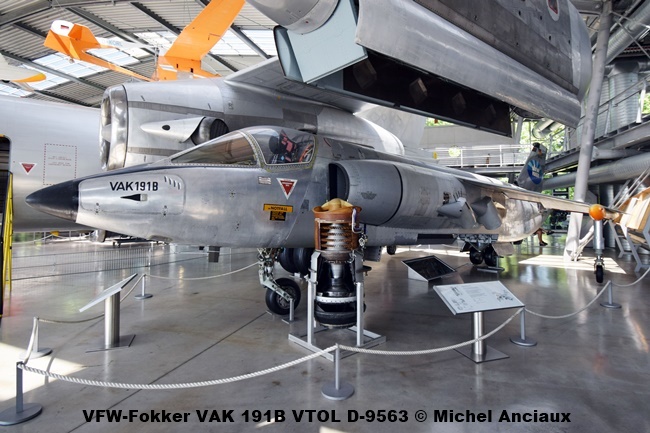
. Versiones de este motor fueron desarrolladas para el Hawker Siddeley Trident 3B con el fin de proporcionar empuje adicional al despegue, además de los tres Rolls Royce Spey 512-5W.
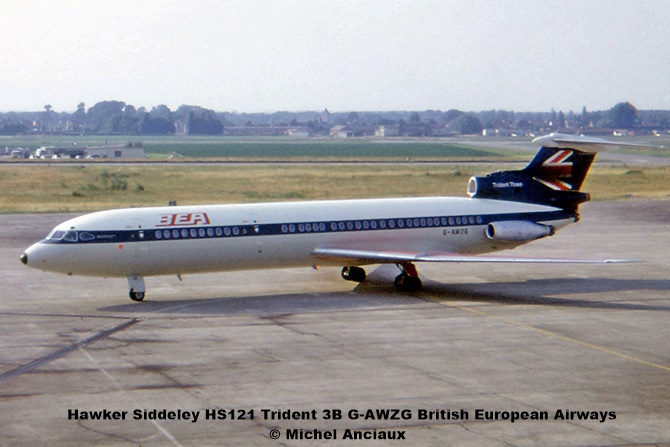
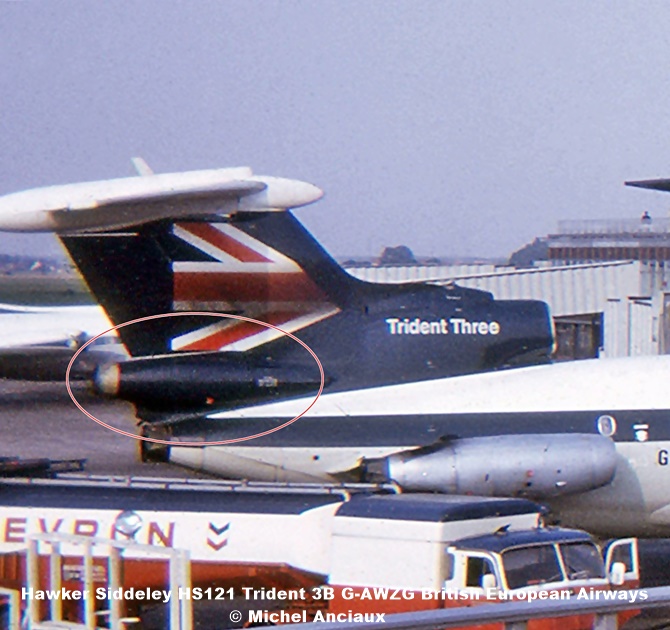
También se utilizo en el proyecto VTOL Mirage IIIV de Dassault (un motor SNECMA TF106 y 8 Rolls-Royce RB162-81 F 08 turborreactores de ascenso vertical).
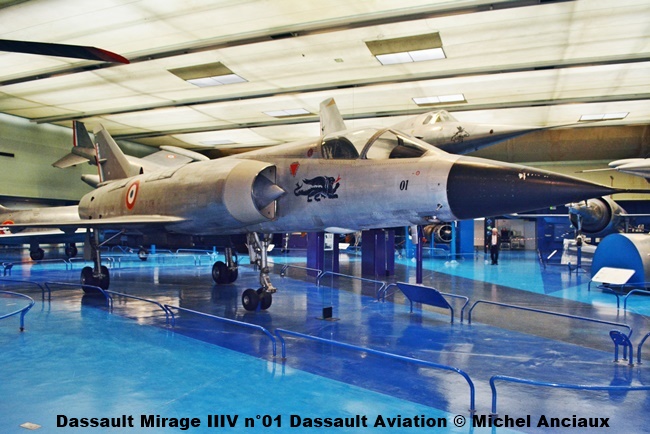
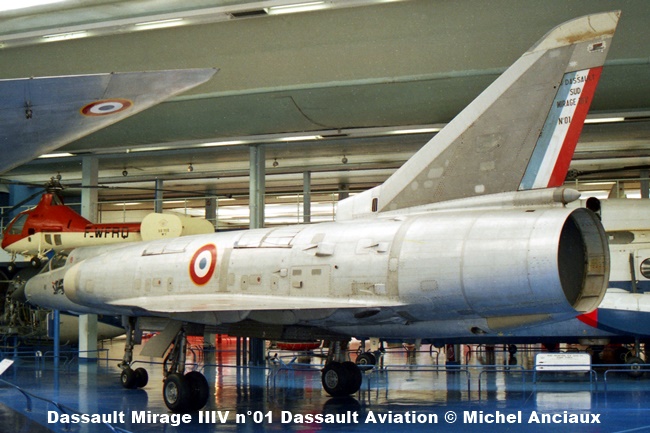
El primero de los 3 prototipos volo realizo su vuelo inicial el 20 de septiembre de 1971.
En cuanto a la primera transición del vuelo vertical al vuelo horizontal, este ocurrió el 26 de octubre de 1972. Conceptos, tales como el fly-by-wire entre otras, y que se probaron con estos prototipos fueron incorporados ulteriormente en el Panavia Tornado.
Igual si tenía similitudes con el diseño del Hawker Siddeley Harrier británico, la diferencia más importante era sus posibilidades de vuelo supersónico (Mach 1,2-1,4).
De los 3 modelos producidos, el D-9563 está en exposición en el Deutsches Museum en Schleißheim.
El D-9564 es parte de las collaciones del Wehrtechnische Studiensammlung (Colección de Estudios de Tecnología de Defensa) (WTS) en Coblenza (Alemania).
Y el D-9565 estaría en la zona del EADS/Airbus complex, en el aeropuerto de Bremen.
Características generales
Longitud: 16,4 m
Envergadura: 6,16 m
Peso máximo al despegue: 9.000 kg
Motorización: 1 Turbofán Rolls-Royce/MAN RB.193-12 con 4 toberas orientables de empuje vectorial para sustentación y empuje y 2 Turborreactores de empuje vertical Rolls-Royce RB162-81 F 08 para sustentación.
Velocidad máxima: 1.108 km/h
Alcance: 400 km
Nivel operativo de vuelo: 15.000 m o 49212 ft
4 aviones, que participaron en diferentes programas de investigaciones o desarrollos tanto como plataformas para equipos científicos o como prototipos, están en presentaciones estáticas en las salas del museo:
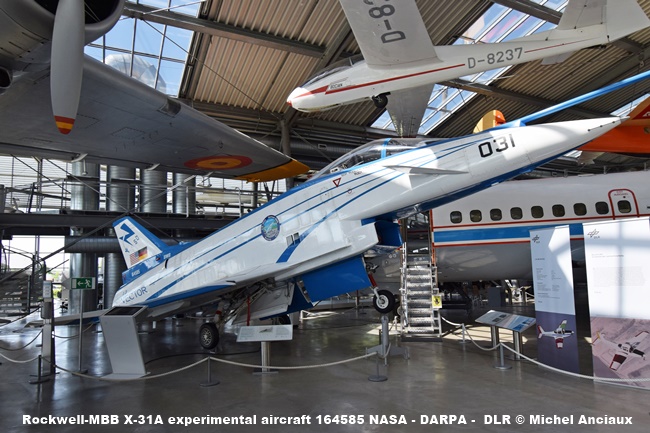
Rockwell-MBB X-31A experimental aircraft 164585.
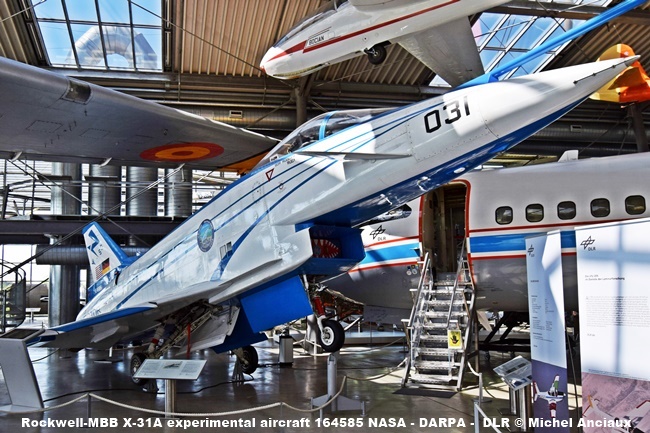
Este avión fue desarrollado y utilizado para el estudio y pruebas de nuevas tecnologías, con el fin de mejorar las maniobrabilidades de los aviones de caza a través de empuje vectorial, dando así más maniobrabilidad que aviones de caza operando en estos años. Fue el resultado de un programa de colaboración germano-estadounidense, el primerio de los 2 prototipo volo por primera vez el 11 de octubre de 1990.
Una de sus características era que podía mantener el vuelo controlado, en situaciones de grandes ángulos de ataque mientras que un avión convencional, en la misma situación terminaría en perdida de sustentación.
Dos prototipos fueron construidos: el X-31 con Nº de seria 164584 que realizó 292 vuelos, pero se accidento el 19 de enero de 1995 al norte de la base aérea de Edwards en california.
Las investigaciones comprobaron que fue la acumulación de hielo dentro del tubo Pitot y informaciones de velocidad aerodinámica erróneas a los computadores de control de vuelo que provocaron la perdida de control. El piloto logro eyectarse.
El segundo X-31, con Nº de seria 164585, cumplo un total de 288 vuelos antes de ser retirado del servicio y desde enero 2003, es parte de las collaciones del museo Flugwerft Schleissheim, en Múnich.
Unos especialistas en aviación militar reconocerán en este avión ciertos detalles o mejor dichos ciertos componentes similares a otros aviones de caza o militares actualmente en operación.
Por ejemplo, la rueda de nariz y neumáticos es la de un F-16 Fighting Falcon, las ruedas de tren de aterrizaje principal y frenos son del Cessna Citation. La sección delantera con el puesto de mando, asiento eyectable y canopy son las del F/A-18 Hornet. Por su parte los actuadores de superficie de control son los del V-22 Osprey.
El concepto de utilizar componentes y materiales ya certificados y utilizados en operaciones regulares permitía de reducir los costos, tiempo y riesgos que podían resultar de un componente totalmente nuevo.
Unas de las tecnologías desarrolladas y comprobadas en el proyecto X-31ª están utilizados en el EF-2000 Typhoon así que el F-22 Raptor.
Características generales
Longitud: 13,2 m
Envergadura: 7,3 m
Peso vacío: 4.633 kg
Peso máximo al despegue: 6.336 kg
Planta motriz: 1× turbofán General Electric F404-GE-400.
Empuje normal: 71 kN 16.000 lbf de empuje.
Velocidad máxima: 1.550 km/h (Mach 1,28)
Nivel de vuelo: 12.200 m o 40.026 ft
Leichflugtechnik-Union LFU 205 D-ELFU DLR Flugbetriebe
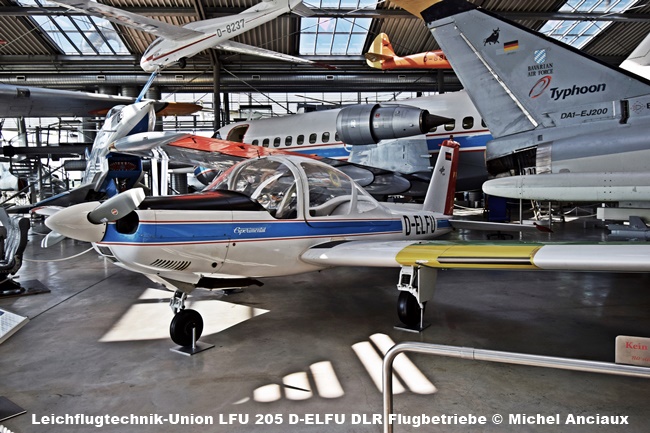
Este avión es considerado como uno de los primero en ser construido en plástico reforzado con fibra de vidrio (Grp o glass-fibre reinforced plastic en inglés) y fue armado por la Leichflugtechnik-Union GmbH (LFU) en Bonn.
Hay que reconocer que las industrias alemanas de planeadores tenían una cierta experiencia en el habito de diseños de planeadores tales como el Phönix y el Phoebus, utilizando este material, pero también para las palas de rotor del Bölkow B0 105.
El primer vuelo del LFU 205 fue el 29 de marzo de 1968 pero este modelo nunca entro en producción y al terminar el programa de pruebas, fue entregado al DFVLR – Deutsche Forschungs und Versuchsanstalt für Luft und Raumfahrt (Centro Aeroespacial Alemán) donde fue utilizado como plataforma de investigación entre otras en desarrollo de los perfiles aerodinámicos laminares.
El avión fue retirado del servicio en 2017 y realizó su ultimo vuelo el 22 de junio del mismo año, al ser entregado al museo de Schleißheim.
Características generales
Longitud: 7,4 m
Envergadura: 10,5 m
Peso al despegue: 1280 kg
Motorización: 1 Lycoming IO-360 de 4 cilindros con enfriamiento por aire de 17kW (200 hp)
Velocidad de crucero: 116 km/h
Alcance: 1000 km
VFW-Fokker VFW-614 D-ADAM DLR – ATTAS
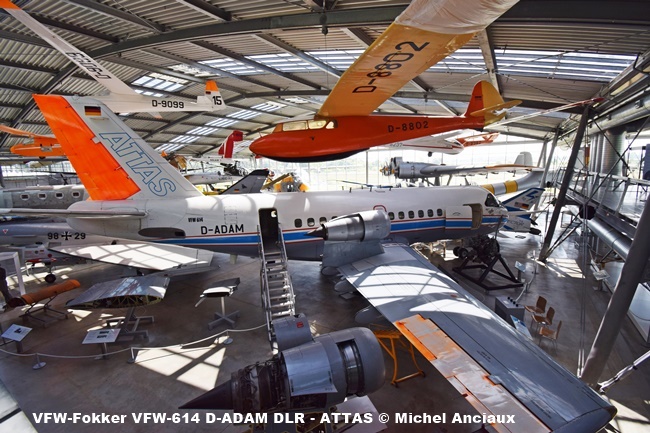
El VFW 614 ATTA (Advanced Technologies Testing Aircraft) fue utilizado por el DLR – Deutsches Zentrum für Luft- und Raumfahrt (centro de investigación aeroespacial de la República Federal de Alemania) como avión de investigación y pruebas en el aérea de conceptos de vuelos y configuraciones en faces de aterrizajes o despegue. Un ejemplo siendo las simulaciones de gestiones de vuelo del Airbus A380 años antes de su primer vuelo.
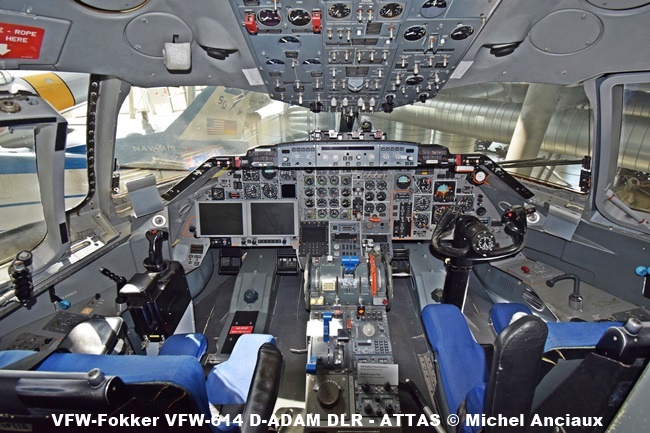
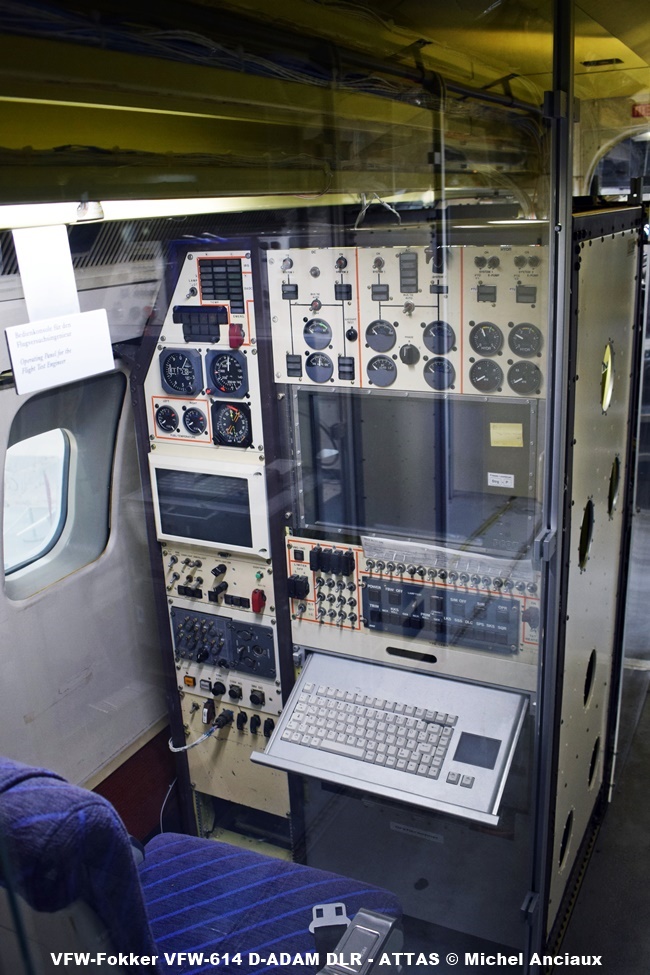
El VFW 614 utilizado fue el ultimo modelo construido, de un total de 19, y fue convertido en 1987 en un Laboratorio Volante. Presto servicio con el DLR hasta su almacenamente en marzo de 2012, por faltas de repuestos. Inicio su último vuelo el 7 de diciembre del mismo año al ser entregado al museo Flugwerft Schleissheim, en el aeródromo de Oberschleißheim cerca de Múnich.
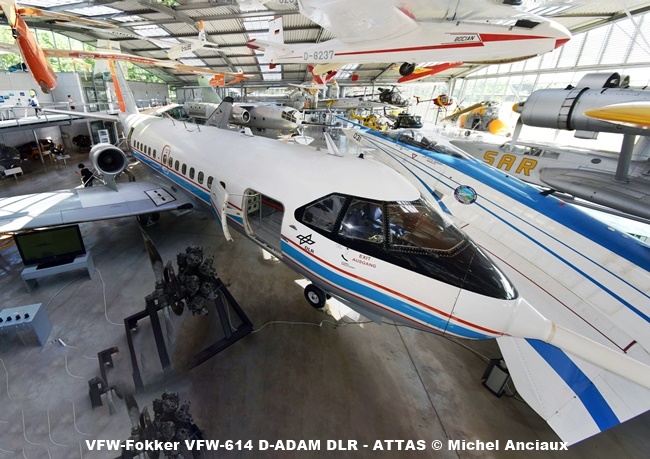
Este diseño tiene sus orígenes en un proyecto de desarrollo para un avión de corta distancia, con capacidad de hasta 44 pasajeros. VFW, que fue el resultado de la fusión entre Focke-Wulf, Weser Flugzeugbau and Ernst Heinkel Flugzeugbau en Bremen utilizó los motores Rolls-Royce / SNECMA M45H en una característica distintiva, colocados en pilones encima de las alas.
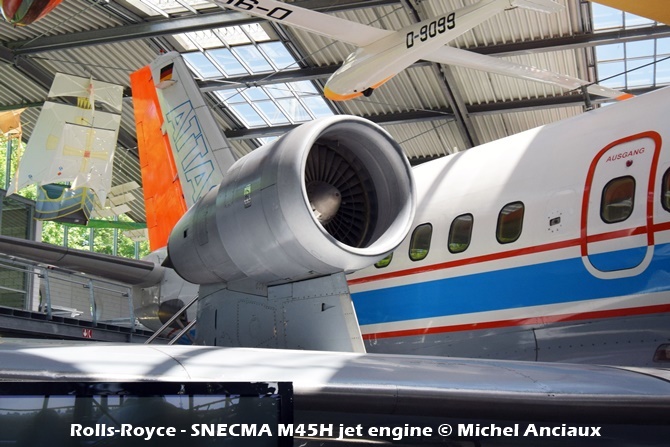
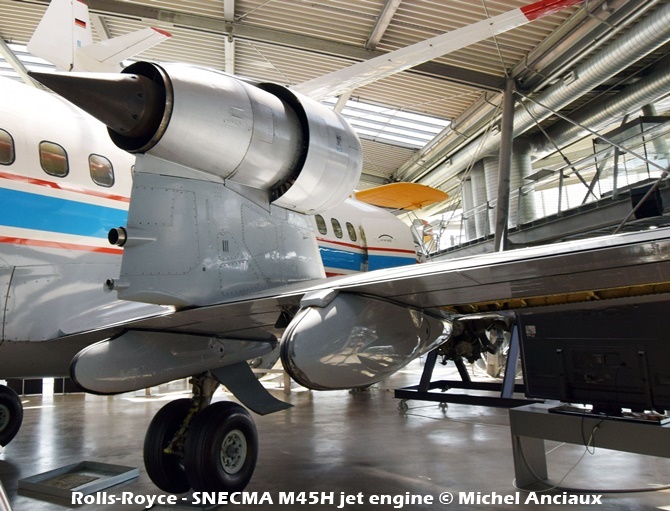
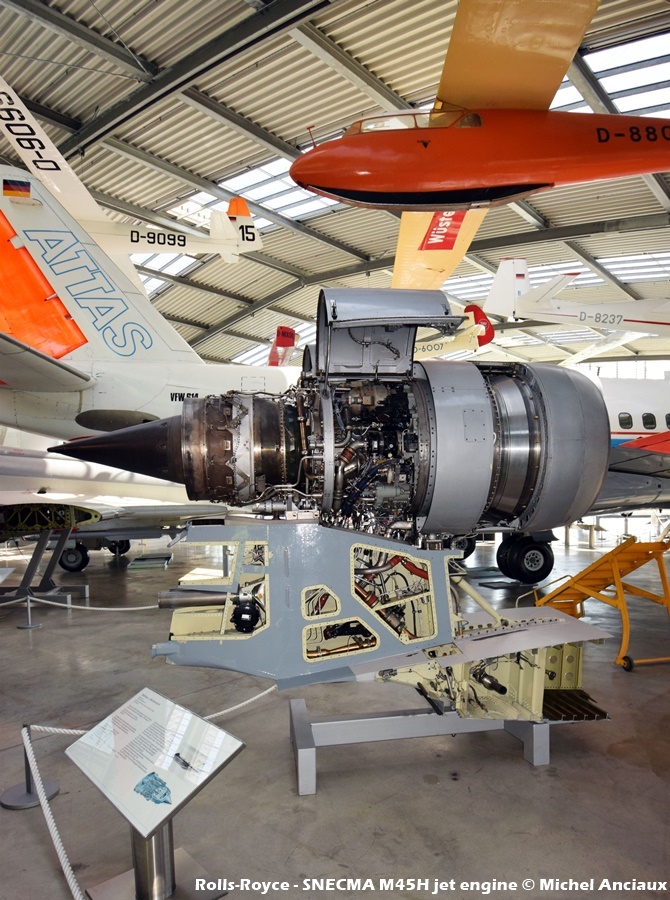
Es considerado como el primer jet de pasajeros desarrollado y construido en la República Federal de Alemania.
Características generales
Longitud: 20,60m
Envergadura: 21,50 m
Peso al despegue: 19.950 kg
Motorización: 2 Rolls-Royce / SNECMA M 45H de 32,3 kN (7264 lbf) de empuje
Velocidad max: 704 km/h o 437 mph / 380kn
Alcance: 1200 km
Techo de vuelo 7620 m o 25 000 ft
Capacidad: 44 pasajeros
Dornier Do 128-6 Turbo Skyservant D-IBUF
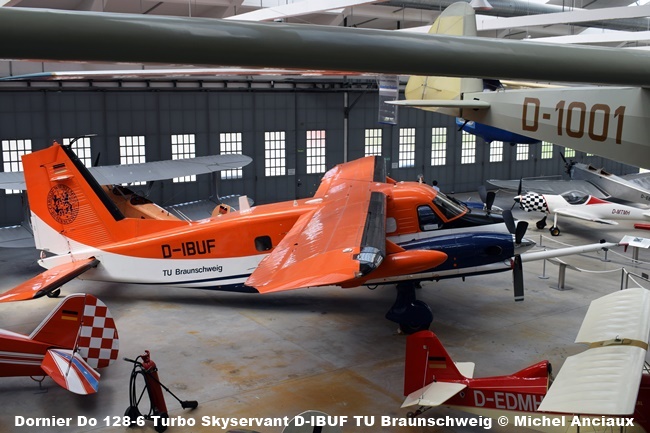
Este avión fue el prototipo para una versión turbo hélice del Dornier Do-28D y volo por primera vez en 1980.
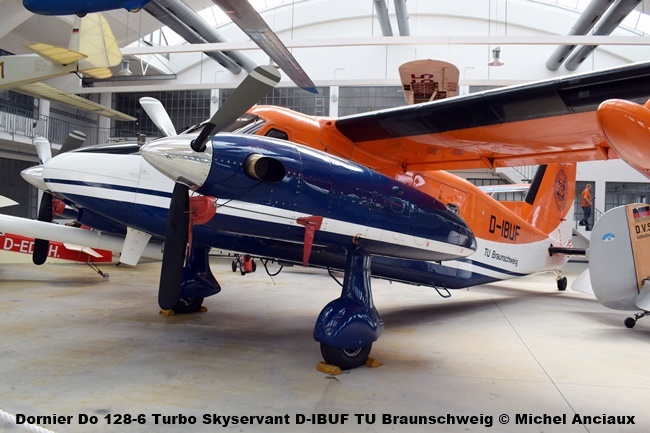
Al cumplir su programa de pruebas de vuelo, fue puesto a disposición del Alfred Wegener Institute (AWI) que lo utilizó en el invierno 1983/1984 para una campaña de investigaciones en la Antártica.
En 1986 paso a cargo del TU Braunschweig que lo utilizó como plataforma de pruebas e investigaciones en el campo de los estudios de fenómenos meteorológicos y otros proyectos.
Como herencia de su campaña de vuelos en la Antártica con el código de radio POLAR 1, guardo sus colores narango, blanco y azul, método de identificación en las zonas de hielo blanco y nieve del Árctico y Antártica.
Uno de los equipos los mas evidente era el pilón de nariz utilizado en las medidas de temperatura humedad, vientos o turbulencias. La posición de estos medidores era necesario por tener una zona libre y sin interferencias del propio avión. Además, para evitar cualquiera vibración u oscilación, este mismo pilón estaba manufacturado a base de CFK compuesto por fibras de carbono muy rígidas.
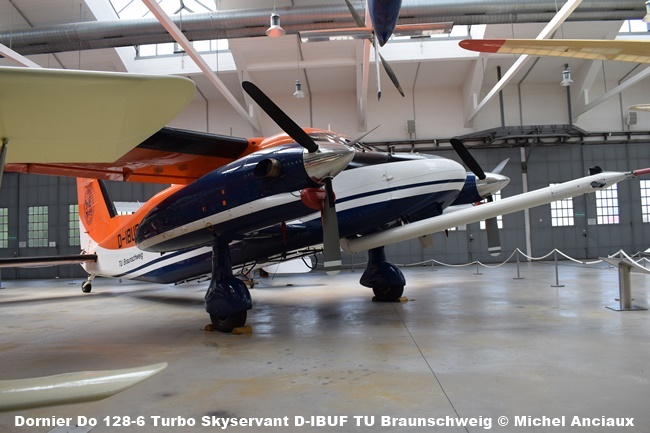
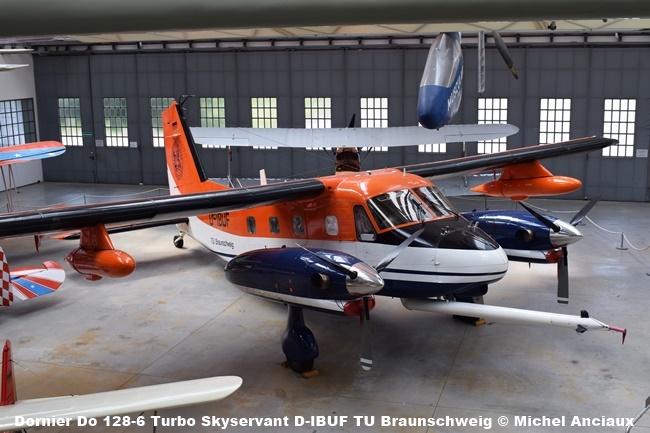
El diseño de la cabina permitía la instalación de equipamientos de estudios y grabaciones de datos.
El avión sirvió en estos trabajos hasta el 17 de octubre de 2021 cuando fue entregado al museo de Múnich. El avión había operado por mas de 35 años, habiendo sido comprado del Alfred Wegener Institute (AWI) en enero de 1986.
Características generales
Longitud: 12 m
Envergadura: 15,50 m
Peso máximum al despegue: 3.600 kg
Motorización: 2 turbohélices Pratt & Whitney PT6A-110 de 475 hp
Velocidad max: 339 km/h o 210 mph/183kn
Alcance máximum: 1815 km
Techo de vuelo 8230 m o 27000 ft
Capacidad: 12 pasajeros
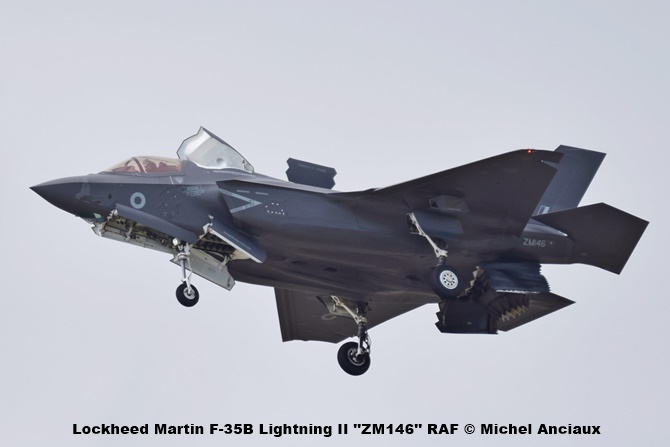
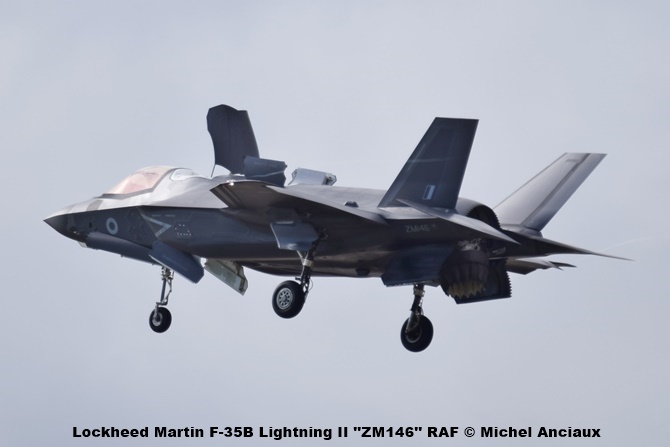
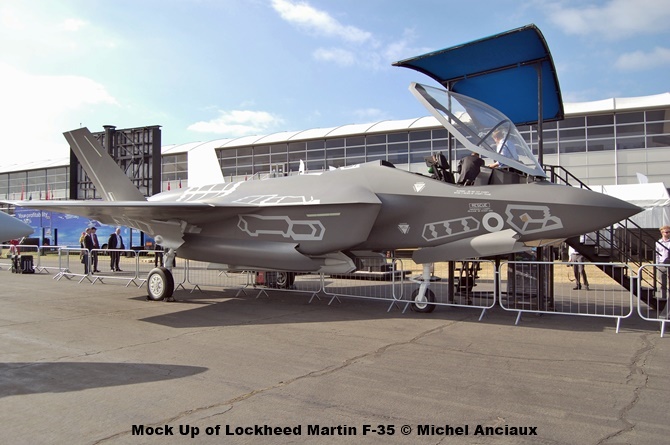
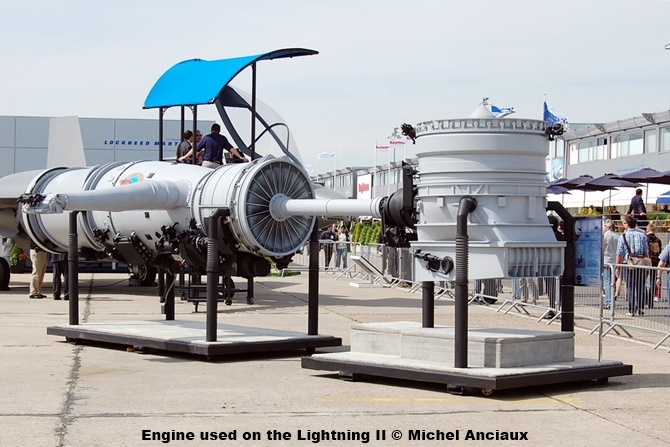
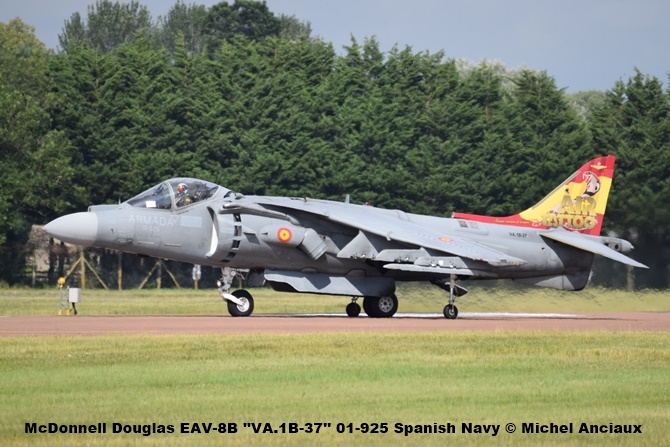
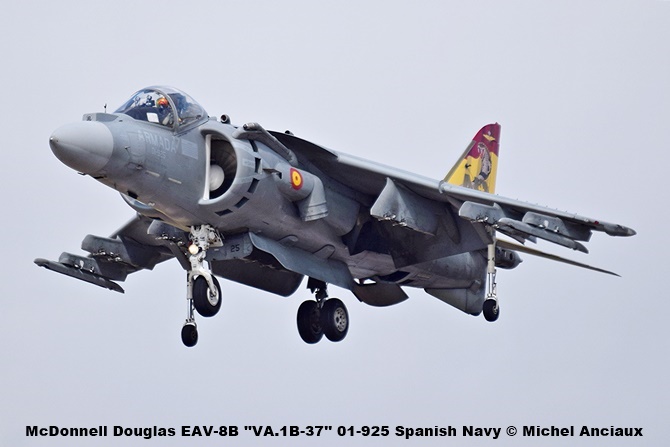
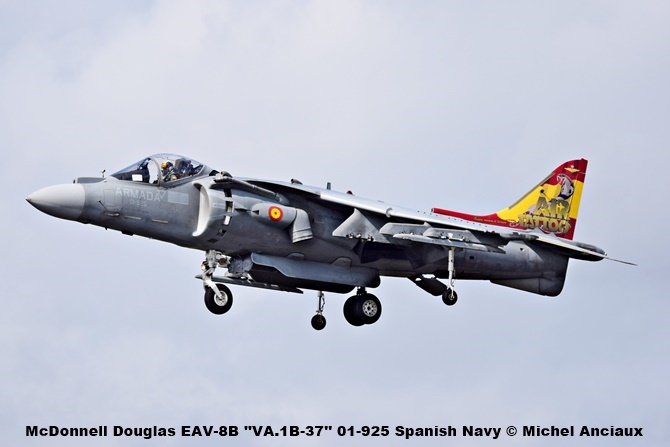
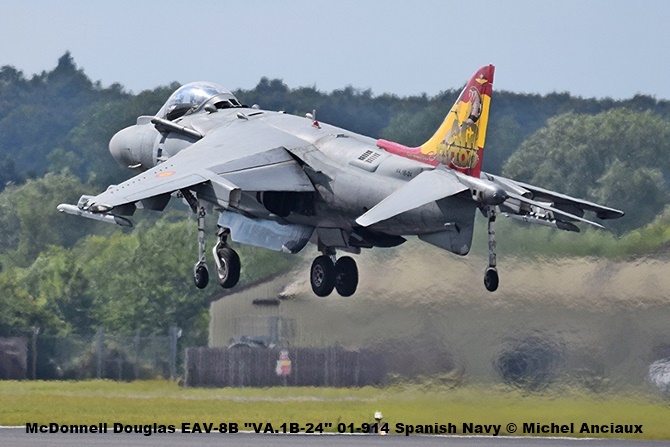
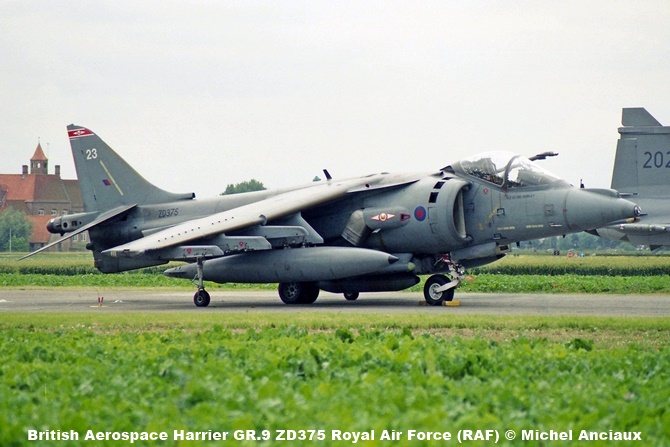
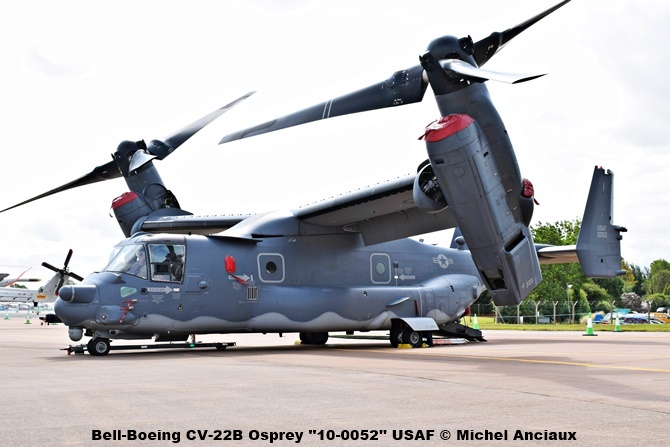
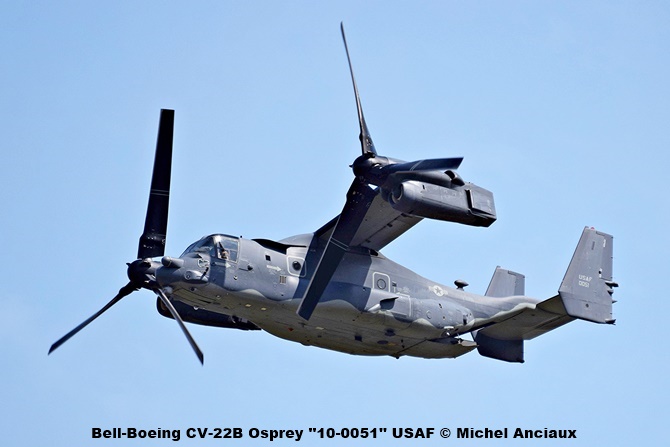
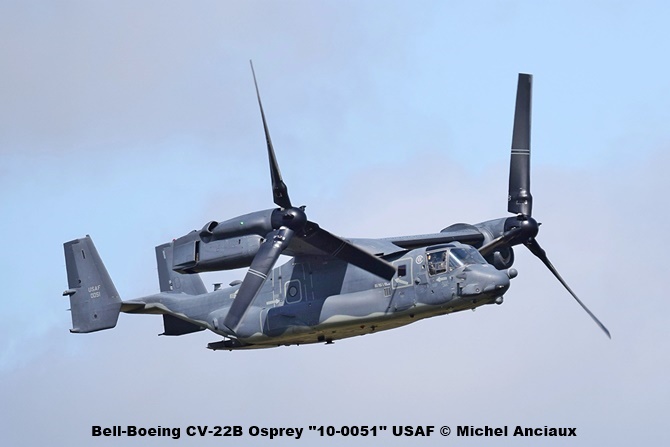
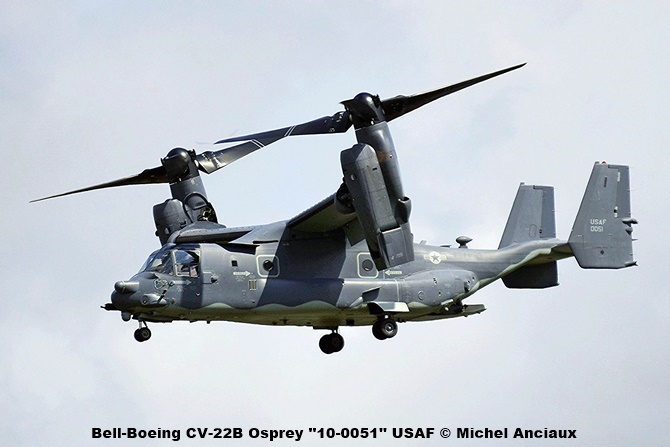
Es de reconocer que, hoy en día, en la mayoría de los shows aéreos organizados tantos en bases aéreas como en ferias internacionales tenemos oportunidades de ver por lo menos uno modelos de avión con características VTOL: El Lockheed Martin F-35B Lightning II, el McDonnell Douglas EAV-8B o su versión original British Aerospace Harrier GR.9 pero también un Bell-Boeing CV-22B Osprey.
Lockheed Martin F-35B Lightning II »ZM146» RAF
McDonnell Douglas EAV-8B »VA.1B-37» 01-925 Spanish Navy
Bell-Boeing CV-22B Osprey
Michel Anciaux
Fuentes de informaciones
https://es.wikipedia.org/wiki/VFW_VAK_191B
https://www.deutsches-museum.de/flugwerft-schleissheim/ausstellung/hubschrauber-und-senkrechtstarter/vak-191
https://es.wikipedia.org/wiki/Dornier_Do_31
https://www.deutsches-museum.de/flugwerft-schleissheim/ausstellung/hubschrauber-und-senkrechtstarter/dornier-do-31
http://foros.aceroyfuego.com/topic/2869-proyecto-dornier-do-31/
https://www.historynet.com/dornier-record-setting-vtol-jet-transport/
http://www.deutsches-museum.de/en/flugwerft-schleissheim/exhibition/air-sports-and-civil-aviation/do-128
https://www.aviation-media.com/Reports/Reports-2020/Do-128-6-D-IBUF
http://www.deutsches-museum.de/en/flugwerft-schleissheim/ausstellung/luftsport-und-zivile-luftfahrt/lfu-205
http://www.deutsches-museum.de/en/flugwerft-schleissheim/exhibition/air-sports-and-civil-aviation/vfw-614-attas
http://www.nasa.gov/aeronautics/aircraft/x-31-demonstrator/
https://en.wikipedia.org/wiki/Rockwell-MBB_X-31
https://es.wikipedia.org/wiki/Rockwell-MBB_X-31
https://aviationsmilitaires.net/v3/kb/aircraft/show/1269/mbb-rockwell-x-31
http://www.deutsches-museum.de/en/search?tx_solr%5Bq%5D=Rockwell-MBB+X-31A
https://www.techtarget.com/whatis/definition/vertical-takeoff-and-landing-VTOL-aircraft
https://aeroreport.de/en/aviation/germany-as-pioneer-the-dream-of-vertical-takeoff
https://www.airvectors.net/avdevtol.html
A visit to the Flugwerft Schleissheim aeronautics and space museum in Munich. (Part 4)
VTOL aircraft projects and in use for research
In this fourth chapter related to my visit to the Flugwerft Schleissheim aeronautics and space museum in Munich in 2022, I will address the topic of German projects for aircraft with vertical takeoff and landing capabilities and aircraft used in aeronautical research and development programs.
The museum has 3 models with VTOL characteristics on display:
The Dornier VJ 101-X2, the Dornier Do 31 E-3 VTOL and the VFW-Fokker VAK 191B VTOL
The aircraft used in research and present in the museum are the following:
the Rockwell-MBB X-31A experimental aircraft 164585, the Leichflugtechnik-Union LFU 205 D-ELFU, the VFW-Fokker VFW-614 D-ADAM and the Dornier Do 128-6 Turbo Skyservant D-IBUF,
Dornier VJ 101-X2 D-9518
The Dornier VJ 101 was a VTOL fighter aircraft project developed from 1960, culminating with its first flight on April 10, 1963, the letters V and J being the identifications of a »Versuchsjäger», that is, an experimental fighter for the development of a possible substitute to the Lockheed F-104G Starfighter which, at this time, was the standard fighter aircraft of the Luftwaffe.
Two prototypes were built but the project was cancelled in 1968. It should be noted that this design was one of the first VTOL fighter aircraft capable of eventual flight at supersonic speeds of Mach 2.
Of the 2 prototypes built, D-9517 was lost in an accident that occurred on September 14, 1964 while performing test flights. American pilot George Bright suffering injuries after ejecting.
For its part, the second prototype with registration number D-9518 is on static display in the Flugwerft Schleissheim museum in Munich and it should be noted that it was equipped with an afterburning engine.
General characteristics
Length: 15.7m
Wingspan: 6.61 m
Maximum take-off weight: 6,100 kg
Engine: 6× Rolls-Royce RB145 turbojet.
Power: 12.2 kN or 2,750 lbf thrust each.
Maximum speed: up to Mach 1.04
Dornier Do 31 E-3 VTOL D-9531
At first glance, the one that stands out due to its dimensions is this transport aircraft with VTOL capabilities.
It was designed by the Dornier Flugzeugwerke as a tactical support aircraft based on the NATO BMR-4 specification.
The concept was developed as a result of tensions with the Eastern Bloc and especially the
vulnerabilities to a possible air attack on Luftwaffe air bases.
In the study plans were, among others, the need to operate from Germany’s highways, thus repeating a concept used at the end of the Second World War.
If, in these years, the then Luftwaffe operated with aircraft powered by radial engines and the first Me 262 jet aircraft, the situation was very different in 1960.
The takeoff weight and the necessary travel distance generated the concept of airplanes with the possibility of short takeoffs and, above all, vertical landings.
Throughout its development, different concepts were studied to finally arrive at the 2 prototypes equipped with 2 inner underwing nacelles in which was a Bristol Pegasus BE.53/2 thrust vectoring turbofan engine of 68.95 kN (15,500 lbf) with four adjustable nozzles, the same engine in improved variants that equips the British Aerospace Harrier and Sea Harrier as well as its American version McDonnell Douglas AV-8B Harrier II.
In addition, at the wingtips are the nacelles with four Rolls-Royce RB162 vertical thrust turbojets of 19.57 kN (4,400 lbf), which operate in vertical takeoff and landing. The same one that equipped the VFW-Fokker VAK 191B VTOL.
The plane had cargo capacity thanks to a rear ramp that allowed the transport of up to 3-ton vehicles.
The first prototype flew on February 10, 1967, but high development costs and technical problems caused the project to be cancelled in April 1970.
2 prototypes and one for static testing were built.
The D-9530 (E1) is on display at the Dornier Museum in Friedrichshafen.
This was only equipped with the Pegasus engines and used in horizontal flight tests.
For its part, D-9531 (E3) is in the Deutsches Museum in Schleissheim, a short distance from Munich.
It was equipped with Pegasus engines with adjustable nozzles as well as the RB162, for vertical flight tests. It flew for the first time in July 1967, making the first vertical flight on November 22 of the same year.
Unlike fighter aircraft, the Dornier Do-31 is considered the first and only vertical take-off and landing jet transport built.
General characteristics
Length: 20.53m
Wingspan: 18 m
Maximum takeoff weight: 27,422 kg
Useful weight: 3,500 kg
Engine: 2× Rolls-Royce Pegasus BE.53/2 thrust vectoring turbofan, 68.95 kN (15,500 lbf) each
8× Rolls-Royce RB162-4D vertical thrust turbojets for lift, 19.57 kN (4,400 lbf) each.
Ability. 2 pilots and 36 soldiers or 24 stretchers for the wounded
Maximum speed: 730 km/h
Cruising speed: 650 km/h
Range: 1,800 km with maximum load
Flight level: 10,700 m or 35105 ft
VFW-Fokker VAK 191B VTOL D-9563
Initially, a fighter-bomber project with VTOL capability designed and built by the German company VFW – Vereinigte Flugtechnische Werke starting in 1962 and the objective was to replace the Fiat G.91, in operation since September 1960.
But due to changing requirements formulated by NATO, the VAK 191B became a test bed and technology demonstrator.
The letters V, A and K stood for Vertikalstartendes Aufklärungs und Kampfflugzeug, meaning vertical take-off fighter and reconnaissance aircraft.
It was powered by a Rolls-Royce/MAN Turbo RB.193 generating a power of 45.2 kN (10,150 lbf) with thrust vectoring, thus providing thrust and lift through four steerable nozzles.
Additionally, two 26.5 kN (5,587 lbf) Rolls-Royce RB162-81 F 08 turbojets provided the vertical thrust. Versions of this engine were developed for the Hawker Siddeley Trident 3B to provide additional thrust at take-off, in addition to the three Rolls Royce Spey 512-5W. It was also used in Dassault’s Mirage IIIV VTOL project (one SNECMA TF106 engine and 8 Rolls-Royce RB162-81 F 08 vertical climb turbojets).
The first of the 3 prototypes made its initial flight on September 20, 1971.
As for the first transition from vertical flight to horizontal flight, this occurred on October 26, 1972. Concepts, such as fly-by-wire among others, that were tested with these prototypes were later incorporated into the Panavia Tornado.
Even if it had similarities with the design of the British Hawker Siddeley Harrier, the most important difference was its supersonic flight possibilities (Mach 1.2-1.4).
Of the 3 models produced, the D-9563 is on display at the Deutsches Museum in Schleißheim.
D-9564 is part of the collections of the Wehrtechnische Studiensammlung (Defense Technology Studies Collection) (WTS) in Koblenz, Germany.
And D-9565 would be in the EADS/Airbus complex area, at Bremen airport.
General characteristics
Length: 16.4m
Wingspan: 6.16 m
Maximum takeoff weight: 9,000 kg
Engine: 1 Rolls-Royce/MAN RB.193-12 turbofan with 4 adjustable thrust vector nozzles for lift and thrust and 2 Rolls-Royce RB162-81 F 08 vertical thrust turbojets for lift.
Maximum speed: 1,108 km/h
Range: 400 km
Operating flight level: 15,000 m or 49212 ft.
4 aircraft, which participated in different research or development programs both as platforms for scientific equipment or as prototypes, are in static presentations in the museum:
Rockwell-MBB X-31A experimental aircraft 164585.
This aircraft was developed and used for the study and testing of new technologies, in order to improve the maneuverability of fighter aircraft through thrust vectoring, thus giving more maneuverability than fighter aircraft operating in those years. It was the result of a German-American collaboration program, the first of the 2 prototypes flew for the first time on October 11, 1990.
One of its characteristics was that it could maintain controlled flight, in situations of high angles of attack, while a conventional aircraft, in the same situation, would end up in a loss of lift.
Two prototypes were built: The X-31 with serial number 164584, which made 292 flights, but crashed on January 19, 1995 north of Edwards Air Force Base in California.
Investigations confirmed that it was the accumulation of ice inside the pitot tube and erroneous airspeed information to the flight control computers that caused the loss of control. The pilot managed to eject.
The second X-1, with serial number 164585, completed a total of 288 flights before being retired from service and since January 2003, it has been part of the collections of the Flugwerft Schleissheim museum in Munich.
Some military aviation specialists will recognize in this aircraft certain details or rather certain components similar to other fighter or military aircraft currently in operation.
For example, the nose wheel and tires are from an F-16 Fighting Falcon, the main landing gear wheels and brakes are from the Cessna Citation. The forward section with the cockpit, ejection seat and canopy are those of the F/A-18 Hornet. For its part, the control surface actuators are those of the V-22 Osprey.
The concept of using components and materials already certified and used in regular operations allowed to reduce the costs, time and risks that could result from a totally new component.
Some of the technologies developed and tested in the X-31A project are used in the EF-2000 Typhoon as well as the F-22 Raptor.
General characteristics
Length: 13.2m
Wingspan: 7.3 m
Empty weight: 4,633 kg
Maximum takeoff weight: 6,336 kg
Powerplant: 1× General Electric F404-GE-400 turbofan.
Normal thrust: 71 kN 16,000 lbf thrust.
Maximum speed: 1,550 km/h (Mach 1.28)
Flight level: 12,200 m or 40,026 ft.
Leichflugtechnik-Union LFU 205 D-ELFU
This aircraft is considered one of the first to be built in glass fiber reinforced plastic (Grp) and was assembled by the Leichflugtechnik-Union GmbH (LFU) in Bonn.
It must be recognized that the German glider industries had some experience in the habit of designing gliders such as the Phönix and the Phoebus, using this material, but also for the rotor blades of the Bölkow B0 105.
The first flight of the LFU 205 was on March 29, 1968, but this model never entered production and at the end of the test program, it was delivered to the DFVLR – Deutsche Forschungs und Versuchsanstalt für Luft und Raumfahrt (German Aerospace Center) where it was used as research platform among others in the development of laminar aerodynamic profiles.
The plane was retired from service in 2017 and made its last flight on June 22 of the same year, when it was handed over to the Schleißheim museum.
General characteristics
Length: 7.4m
Wingspan: 10.5 m
Takeoff weight: 1280 kg
Engine: 1 Lycoming IO-360 4-cylinder air-cooled 17kW (200 hp)
Cruising speed: 116 km/h
Range: 1000 km
VFW-Fokker VFW-614 D-ADAM
The VFW 614 ATTA (Advanced Technologies Testing Aircraft) was used by the DLR – Deutsches Zentrum fur Luft- und Raumfahrt (aerospace research center of the Federal Republic of Germany) as a research and test aircraft in the field of flight concepts and configurations during landing or takeoff phases. An example being the flight management simulations of the Airbus A380 years before its first flight.
The VFW 614 used was the last model built, of a total of 19, and was converted in 1987 into a Flying Laboratory. It served with the DLR until it was put into storage in March 2012, due to a lack of spare parts. It made its last flight on December 7 of the same year when it was delivered to the Flugwerft Schleissheim museum, at the Oberschleißheim airfield near Munich.
This design has its origins in a development project for a short-haul aircraft, with a capacity of up to 44 passengers. VFW, which was the result of the merger between Focke-Wulf, Weser Flugzeugbau and Ernst Heinkel Flugzeugbau in Bremen used the Rolls-Royce/SNECMA M45H engines in a distinctive feature, placed on pylons above the wings.
It is considered the first passenger jet developed and built in the Federal Republic of Germany.
General characteristics
Length: 20.60m
Wingspan: 21.50 m
Takeoff weight: 19,950 kg
Engine: 2 Rolls-Royce / SNECMA M 45H of 32.3 kN (7,264 lbf) thrust
Max speed: 704 km/h or 437 mph / 380kn
Range: 1200 km
Flight ceiling 7,620 m or 25,000 ft
Capacity: 44 passengers.
Dornier Do 128-6 Turbo Skyservant D-IBUF
This aircraft was the prototype for a turboprop version of the Dornier Do-28D and first flew in 1980.
Upon completion of its flight test program, it was placed at the disposal of the Alfred Wegener Institute (AWI), which used it in the winter of 1983/1984 for a research campaign in Antarctica.
In 1986 it was transferred to the TU Braunschweig, which used it as a platform for testing and research in the field of studies of meteorological phenomena and other projects.
As a legacy of its flight campaign in Antarctica with the radio code POLAR 1, it keeps its orange, white and blue colors, an identification method in the white ice and snow areas of the Arctic and Antarctic.
One of the most obvious pieces of equipment was the nose pylon used in measuring temperature, humidity, winds or turbulence. The position of these sensors was necessary to have a free area without interference from the plane itself. Furthermore, to avoid any vibration or oscillation, this same pylon was manufactured with CFK composed of very rigid carbon fibers.
The design of the cabin allowed the installation of investigation equipment and data recording.
The aircraft served in these works until October 17, 2021 when it was delivered to the Munich museum. The aircraft had operated for over 35 years, having been purchased from the Alfred Wegener Institute (AWI) in January 1986.
General characteristics
Length: 12m
Wingspan: 15.50 m
Maximum takeoff weight: 3,600 kg
Engine: 2 Pratt & Whitney PT6A-110 turboprops of 475 hp
Max speed: 339 km/h or 210 mph/183kn
Maximum range: 1815 km
Flight ceiling 8230 m or 27000 ft
Capacity: 12 passengers
It is to recognized that, today, in most air shows organized both at air bases or international fairs we have opportunities to see at least one aircraft model with VTOL characteristics: The Lockheed Martin F-35B Lightning II, the McDonnell Douglas EAV-8B or its original version British Aerospace Harrier GR.9 but also a Bell-Boeing CV-22B Osprey.
 Aviation Rainbows
Interesante conocer aeronaves que no entraron en producción, pero que sirvieron para dar inicio a otras investigaciones y desarrollo de nuevos aviones.-
Me gustaMe gusta